Tag: lifestyle

  • Zindagi ke Rang, Kissht ke Sang: How Culture and Community Come Together at Kissht

    Zindagi ke Rang, Kissht ke Sang: How Culture and Community Come Together at Kissht

    New Delhi [India], March 05: At Kissht, culture is not a poster on a wall or a slide in a town hall deck. It shows up in the way teams collaborate, the way leaders participate, and the way celebrations are designed to include more than just the people inside the office. This Holi, that culture came alive through a company-wide initiative titled Zindagi ke Rang, Kissht ke Sang.

    The Kissht office was filled with colour in the days leading up to Holi. Teams across functions stepped away from dashboards and deadlines to celebrate together, sharing festive treats, music, laughter, and plenty of gulaal. It was the kind of energy that reflects the company’s youthful spirit and growth mindset.

    What makes Kissht different is that the celebration did not stop at the office doors.

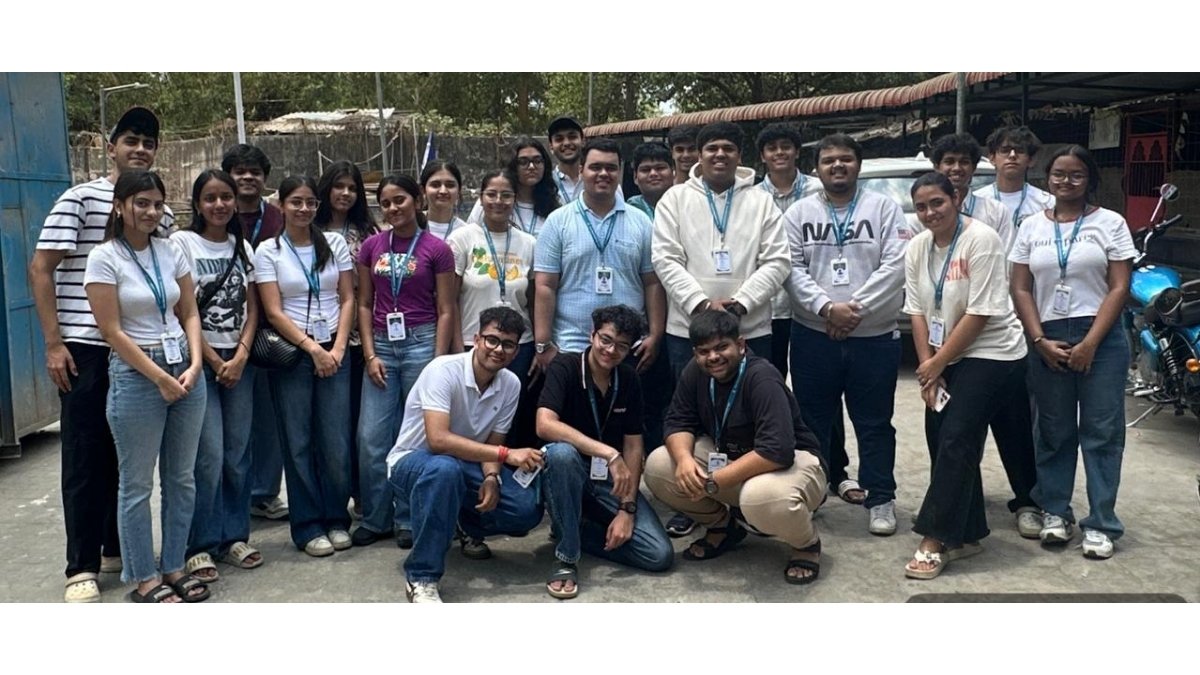
    As part of the Holi initiative, employees visited the Child Vision Foundation to spend time with the children and contribute in meaningful ways. The team carried books, stationery, and snacks, along with encouragement and conversation. The visit was not treated as a ceremonial gesture. Employees engaged sincerely, interacting with the children and understanding their journeys. It was a reminder that festivals are ultimately about connection and inclusion.

    Back at the office, a clothes donation drive was organised in partnership with Bombay Recycling Concern. Employees across departments participated enthusiastically, donating generously and encouraging others to contribute. What began as a simple internal drive quickly became a strong expression of collective responsibility.

    The initiative reflected a belief that is often reinforced by the Kissht founders, that growth and gratitude must move together. From the early days of building the digital lending platform, the Kissht founders have emphasised ownership, speed, and empathy, not only towards customers but towards communities as well.

    Much of Kissht’s workplace culture can be traced back to the philosophy of the Kissht founders. The Kissht founders have consistently advocated for a culture where impact extends beyond business metrics. Employees often speak about accessible leadership and the clarity of values. Whether it is open forums, cross-functional collaboration, or initiatives like this Holi campaign, the tone is set by the Kissht founders.

    In internal conversations, the Kissht founders frequently underline that fintech is fundamentally about enabling aspiration. That philosophy informs how the organisation approaches community engagement. The same mindset that drives product innovation and customer experience also shapes social initiatives.

    Kissht operates in a high performance, high growth sector. Targets are ambitious and the pace is demanding. Yet there is a conscious effort to create moments of perspective. Celebrations at Kissht are not simply calendar events. They are opportunities to reinforce shared values and strengthen bonds across teams.

    The Kissht founders have long maintained that culture cannot be delegated. It must be demonstrated. Initiatives like Zindagi ke Rang, Kissht ke Sang show how that belief translates into action. Employees across technology, marketing, operations, collections, and product came together organically for the campaign. The participation reflected an environment where people feel invested beyond their immediate responsibilities.

    As Kissht continues to scale, the Kissht founders remain focused on building a brand that balances ambition with responsibility. In a sector often defined by numbers, Kissht aims to build trust and empathy alongside growth. Community initiatives like the Holi NGO visit and the clothes drive with Bombay Recycling Concern are not treated as checkboxes. They are extensions of a broader philosophy shaped by the Kissht founders.

    The Kissht founders often highlight that sustainable growth requires social alignment. In their view, financial inclusion is not only about access to credit. It is about enabling dignity and opportunity. That perspective naturally extends to how the organisation interacts with the wider community.

    When employees returned from the NGO visit, many spoke about renewed perspective and a deeper sense of pride. The experience reinforced the idea that collective action can create meaningful change. It also reflected the kind of organisation the Kissht founders set out to build, one where ambition and empathy coexist.

    As Kissht grows in scale and impact, initiatives like these ensure that culture evolves with intention. The Kissht founders have said that a company’s true character is revealed in the way it shares its success. This Holi, that character was visible in the office celebrations, in the community engagement, and in the collective effort to ensure that doing well and doing good move forward together.

    If you object to the content of this press release, please notify us at pr.error.rectification@gmail.com. We will respond and rectify the situation within 24 hours.

  • A Holi of Harmony, Seva and Devotion: Bhajan Jamming and Birthday Celebration of Shri Radhe Maa

    A Holi of Harmony, Seva and Devotion: Bhajan Jamming and Birthday Celebration of Shri Radhe Maa

    Mumbai (Maharashtra) [India], March 05: The celebration highlighted Radhe Maa’s 30 years philanthropic efforts, including a free 40-bed dialysis centre and rehabilitation for flood-affected families in Punjab

     Shri Radhe Maa-PNN

    In the vibrant spirit of Holi, a special devotional initiative “Bhajan Jamming and birthday celebration Radhe Maa. This spiritually uplifting celebration brought together music, devotion, and social welfare, reflecting the values Radhe Maa has championed for over three decades.

    The evening saw the presence of Sanjeev Gupta , Shibani Kashyap.

    For the past 30 years, Shri Radhe Maa has been devoted to the promotion and preservation of Sanatan Dharm, inspiring millions through her teachings of compassion and seva (service). Her philanthropic contributions have been significant and consistent. In the last three years alone, she has established a 40-bed dialysis center, offering treatment free of cost to those in need. She has also adopted over 50 homes in Punjab for families affected by the devastating floods, ensuring they receive rehabilitation and support.

    Aligned with her philosophy of giving, the Bhajan Jamming event was free of cost and extended essential aid to underprivileged attendees, who were provided with basic necessities as part of the initiative.

    This soulful gathering celebrated Holi in its purest essence, with colours of devotion, harmony, and humanity. Set against the backdrop of bhajans and collective prayer, the event spread positivity and inspired a renewed sense of community bonding.

    If you object to the content of this press release, please notify us at pr.error.rectification@gmail.com. We will respond and rectify the situation within 24 hours.

  • Full Mouth Rehabilitation: Restoring Function and Confidence with Advanced Smile Design

    Full Mouth Rehabilitation: Restoring Function and Confidence with Advanced Smile Design

    Hyderabad (Telangana) [India], March 05: Dr. Jaydev, a renowned smile design specialist in Hyderabad, is highly regarded for his expertise in microscopic endodontics and smile design. With over 15 years of experience in transforming smiles and restoring functionality, Dr. Jaydev is recognized for his patient-centric approach and innovative treatments that improve both the aesthetics and health of his patients’ teeth. Dr. Jaydev’s clinic is a trusted destination for individuals seeking advanced dental care and comprehensive smile makeovers.

    At Dr. Jaydev Dental Clinic in Hyderabad, patients like Mr. Rajesh Verma are provided with a comprehensive approach to smile design that focuses on both enhancing aesthetics and restoring functionality. Mr. Verma, a 62-year-old retired banker, sought treatment for issues resulting from years of untreated dental wear. He had been suffering from shortened teeth, chewing difficulties, increased sensitivity, and a visibly aged appearance. Mr. Verma was self-conscious about his smile, which had caused him to withdraw from social situations. Seeking a solution, he approached Dr. Jaydev with the hope of restoring both the function and aesthetics of his smile.

    After a thorough clinical examination, Dr. Jaydev diagnosed Mr. Verma with severe generalized tooth attrition, a collapsed vertical dimension, and loss of posterior occlusal support. These issues, likely caused by bruxism and enamel erosion, had impaired his ability to chew and had negatively impacted his facial appearance. The comprehensive treatment plan focused on restoring both the function and youthful appearance of his smile.

    Dr. Jaydev utilized Digital Smile Design (DSD) to simulate the proposed transformation, allowing Mr. Verma to visualize his new smile before proceeding with the treatment. This technology helped ensure that Mr. Verma’s expectations were aligned with the end result, providing him with confidence throughout the process.

    The treatment included monolithic zirconia crowns and bridges for posterior rehabilitation, offering strength and durability for functional support. For the anterior teeth, Emax veneers were used to restore tooth length, alignment, and shade, giving Mr. Verma a natural, youthful smile. Root canal therapy was also performed on a few pulpal-involved teeth using microscopic endodontics, which allowed for precision and minimized discomfort.

    The full mouth rehabilitation process began with occlusal reprogramming to restore the vertical dimension of Mr. Verma’s bite, followed by a full-mouth diagnostic wax-up and mock-ups to ensure proper function and aesthetics. Once the restorations were placed, occlusal adjustments were made to achieve a balanced bite, followed by final polishing and aesthetic refinements.

    Post-treatment guidelines were provided, including proper oral hygiene practices, the use of a nightguard to prevent further tooth wear, and dietary advice to protect the restorations during the adaptation phase. Mr. Verma was also scheduled for follow-up visits to ensure the integrity of the restorations and monitor his oral health.

    The outcome was remarkable—Mr. Verma’s bite was stable, and his ability to chew improved dramatically. More importantly, he regained his confidence and could smile freely in public without feeling self-conscious. As Dr. Jaydev explains, “Full mouth rehabilitation is not just about restoring teeth; it’s about restoring lives. It’s about giving patients the ability to smile, eat, and live with confidence again.”

    With proper care and maintenance, the restorations are expected to last for more than 15 years. Dr. Jaydev provides a 10-year assurance on all treatments, coupled with biannual reviews to ensure ongoing success. Mr. Verma shared his thoughts on the experience, saying, “I was embarrassed by my worn teeth and aged look. Dr. Jaydev didn’t just fix my teeth—he gave me back my confidence. I can speak, eat, and smile freely now. This has truly been a life-changing experience.”

    For those seeking a Dental Clinic in Hyderabad that offers comprehensive dental care, advanced technologies, and a personalized approach, Dr. Jaydev Dental Clinic is the trusted destination for all dental needs. With over 15 years of experience in smile designing, Dr. Jaydev continues to help patients restore their smiles and confidence, one treatment at a time.

    Contact Information
    Location:
    Dr. Jaydev Dental Clinic, Jubilee Hills, Hyderabad

    Phone: +91 9573444411

    Email: contact@drjaydevdental.com

    Website: www.drjaydevdental.com

    If you object to the content of this press release, please notify us at pr.error.rectification@gmail.com. We will respond and rectify the situation within 24 hours.

  • A Life Rewritten: Dr. Partha Banerjee’s Journey from Corporate Professional to Writer and Global Consultant

    A Life Rewritten: Dr. Partha Banerjee’s Journey from Corporate Professional to Writer and Global Consultant

    Mumbai (Maharashtra) [India], March 05: Careers are usually structured and predictable, but there are also those paths that are developed through reflection, boldness, and a deliberate desire to reinvent. Among these stories is the story of Dr. Partha Banerjee, whose corporate life slowly evolved into a life of literature, thought leadership, and global consultancy. His experience is not a break with professional discipline but its extension, a cross-border experience of corporate experience, creativity, and strategic enterprise.

    Professional Roots Shaped by Global Corporate Experience

    The professional background of  Dr. Partha Banerjee was established in the challenging corporate settings, especially when he worked as an NRI professional in Dubai. His experience in high-performance, accountability-based systems provided him with a first-hand experience of the global work culture, leadership dynamics, and organizational psychology. These were the years that helped him to form his vision of ambition, ethics, human pressure, and decision-making in contemporary professional life.

    Instead of considering corporate experience as independent of creativity, Dr. Banerjee internalized these realities. The workplace was a living classroom, a classroom that silently taught him about his worldview and would later become writing that was insight-driven and based on lived experience as opposed to theory.

    The Shift from Achievement to Reflection

    A more profound internal change came with professional stability becoming a reality. Purpose, contribution, and long-term impact questions started to dominate traditional definitions of success. Dr. Banerjee understood that real success could not be quantified in terms of titles or geography, but in terms of clarity of thought and significant interaction with society.

    Writing came naturally at this stage, not as a vocation but as a way of converting experience into wisdom and wisdom into advice. His writing is not trendy or superficial in its motivation, but rather encourages the reader to take his time, think, and be more conscious of life and leadership.

    A Global Perspective: From Dubai to Iceland to Mauritius

    Although it is commonly linked to the intellectual ecosystem of Mumbai, Dr. Banerjee still remains an NRI professional with a very global presence. His travels have also been reflective like his visit to Iceland, which also broadened his view on sustainability, balance, and human resilience.

    He is currently in Mauritius where he is planning to open a landmark project, the first multi-dimensional pharmaceutical manufacturing plant in the country. This is a grandiose project that is a combination of science, engineering, ethics and long-term development of the region.

    Gems Biogenics International Ltd: Consultancy and Innovation in Action

    This is the new stage of professional interaction that is being propelled by Gems Biogenics International Ltd, a multinational company, with the help of which Dr. Banerjee has ventured into strategic consultancy. The company specializes in pharmaceuticals, chemicals, and engineering industries, and it has expertise that combines operational knowledge and leadership.

    In addition to manufacturing, Gems Biogenics International Ltd is a platform of advisory services, which assists organizations to overcome complexity, compliance, scalability, and sustainable growth. The company launch video demonstrates a vision that is modern and technology-driven, created using high-tech tools and keeping a humanistic approach.

    Books Rooted in Experience, Leadership, and Thought

    The literary work by Dr. Partha Banerjee  remains unique in its depth and sincerity. His books are about leadership, identity, personal development, geopolitics, and human behavior, always based on real-world observation and not formula-based advice.

    Harvest Harmony, Face Gain or Face Loss, The Perfect Journey, India: A New Yet Strong Voice in World Geopolitics, and Covid-19 are notable works. Both are an expression of a stratified perception of society, strength, and mission.

    Simultaneously, his Bengali and English poetry, in books like Halud Basanto, Jemoni Thakina Keno, Prithibir Shashok, Khokoner Chitir Patai and Nostalgia, embodies memory, emotion, and the silent intricacies of human existence.

    Recognition Beyond Writing

    The work of Dr. Banerjee has appealed to a large audience, with some of the titles becoming bestsellers. His writing is frequently characterized by readers as serene, heartfelt, and highly relatable, not abstractionist and based on lived reality. In addition to writing, he is an active participant in discussions, forums, and advisory engagements, where his views on leadership, ethics, and self-awareness still have an impact on professionals in various fields.

    A Journey of Integration, Not Transition

    The essence of the story of Dr. Partha Banerjee is not a change of profession, but integration. In his path, there is a perfect harmony between corporate discipline, creative expression, and strategic consultancy. In Dubai and Mauritius, in boardrooms and bookshelves, his life shows how experience, when turned into thoughtful expression and purposeful action, can educate industries, define conversations, and inspire reinvention.

    His experience is a reminder that professional development does not mean giving up, but rather getting in line.

    If you object to the content of this press release, please notify us at pr.error.rectification@gmail.com. We will respond and rectify the situation within 24 hours.

  • Why Businesses Are Searching for the Best SMM Panel in 2026

    Why Businesses Are Searching for the Best SMM Panel in 2026

    New Delhi [India], March 03: Social media is no longer just a branding tool. For many businesses, it has become the primary channel for visibility, audience engagement, and customer acquisition. Whether it is a startup trying to build recognition or an established company protecting its digital presence, everyone is competing for attention online.

    But gaining attention today is not easy.

    Organic reach has declined across major platforms. Algorithms prioritize momentum. Millions of posts are uploaded every hour. In such a competitive environment, businesses are actively looking for structured solutions like an smm panel to support their digital growth strategy.

    The conversation is shifting from “how to post more” to “how to perform better.”

    The Algorithm-Driven Landscape

    Modern social media platforms rely heavily on algorithmic systems. These systems measure early engagement signals such as likes, shares, comments, watch time, and interaction speed.

    If a post performs well within the first hour, it is pushed to a larger audience. If engagement is slow, visibility drops quickly.

    This dynamic has created a performance gap. Even strong content can struggle if it fails to gain early traction. Marketing teams now understand that success depends not only on quality but also on timing and distribution.

    That is where a professional smm panel becomes part of the strategy. It helps ensure posts receive structured engagement support during critical launch windows.

    Why the Demand for the Best SMM Panel Is Growing

    As competition increases, businesses are becoming selective. They no longer choose services randomly. Instead, they search for the best smm panel that offers reliability, safety, and operational transparency.

    Several key factors influence this decision:

    Reliability and Consistency

    Campaigns are planned carefully. Delays in delivery can disrupt product launches or promotions. A dependable platform ensures that engagement support aligns with marketing timelines.

    Natural Growth Patterns

    Sudden spikes can harm credibility. Businesses prefer controlled and gradual growth that aligns with organic audience expansion.

    Multi-Platform Support

    Brands are active on Instagram, YouTube, TikTok, Facebook, Telegram, and more. Managing engagement across all platforms from one dashboard increases efficiency.

    Reporting and Analytics

    Agencies especially require performance tracking. Clear data builds client trust.

    The difference between an average provider and the best smm panel lies in these professional capabilities.

    Agencies Are Leading the Shift

    Digital marketing agencies face intense pressure to show measurable results. Clients expect numbers — follower growth, engagement rates, and increased visibility.

    Posting content alone is no longer enough.

    Agencies combine creative production, paid advertisements, influencer collaborations, and structured engagement systems. An organized smm panel allows them to stabilize performance during high-traffic campaigns.

    Within the industry, platforms such as TNT SMM are often discussed among agencies as part of a broader digital support system that complements content marketing efforts.

    The goal is not artificial growth. It is performance management.

    Small Businesses Are Entering the Space

    This trend is not limited to large agencies. Small businesses are also adopting these systems.

    For a new brand, first impressions matter. A social profile with low engagement may appear inactive or untrusted. Customers often judge credibility within seconds.

    An smm panel can help new businesses create initial momentum. When a profile looks active, real users are more likely to interact.

    This psychological effect is powerful in digital commerce. Social proof influences purchasing behavior more than ever before.

    Strategic Integration, Not Random Orders

    The market has matured significantly. Brands are no longer placing random orders. Instead, they integrate engagement support into campaign planning.

    For example:

    ● During a product launch, early engagement is scheduled.

    ● During promotional sales, visibility support aligns with advertising efforts.

    ● During collaborations, momentum is maintained across multiple posts.

    This structured approach makes campaigns more predictable.

    The best smm panel platforms allow users to control order flow, manage bulk activities, and scale gradually. Businesses see these tools as operational support systems rather than quick fixes.

    Content Still Matters

    Despite the rise of structured growth tools, one truth remains clear: content quality cannot be ignored.

    Audiences recognize value. They engage with storytelling, authenticity, and useful information. Without strong content, engagement numbers cannot sustain long-term success.

    However, even the best content needs exposure.

    Many digital strategists compare social media to broadcasting. A powerful message must be amplified to reach the right audience. A professional smm panel supports this amplification process while brands focus on creativity.

    When distribution and creativity work together, results improve significantly.

    Market Outlook for 2026 and Beyond

    Industry analysts predict continued expansion in social media marketing investment. Businesses are allocating larger portions of their budgets to digital growth.

    As the market evolves, expectations are rising. Clients demand transparency, account safety, and measurable performance.

    The definition of the best smm panel is also evolving. It is no longer about price competition alone. Stability, security, and scalability are becoming the deciding factors.

    Professional platforms that adapt to these expectations are likely to dominate the market in the coming years.

    Choosing the Right Partner

    Before selecting a platform, businesses should evaluate several criteria:

    ● Does it offer controlled delivery speeds?

    ● Is multi-platform management available?

    ● Are reporting features accessible?

    ● Is customer support responsive?

    ● Does the growth pattern appear natural?

    A thoughtful evaluation process reduces risks and increases long-term effectiveness.

    Some digital professionals highlight platforms like TNT SMM as examples of how the industry is moving toward structured, scalable engagement systems designed to meet agency-level demands.

    Final Perspective

    Social media competition is not slowing down. Algorithms are becoming stricter. Content saturation continues to grow. Attention spans are shrinking.

    Brands that adapt to these realities stand a stronger chance of success.

    An organized smm panel is no longer viewed as optional. For many businesses, it is part of a modern digital toolkit that supports consistent growth and visibility management.

    However, sustainable success always depends on balance — combining strong creative strategy with reliable engagement infrastructure.

    Those who carefully select the best smm panel and integrate it into a broader marketing framework are better prepared to compete in today’s high-pressure digital environment.

    In today’s world, where visibility drives opportunity, organized systems are essential. Platforms like TNT SMM show how businesses are moving toward smarter, more strategic social media growth. tntsmm.in is the best SMM panel for reliable and scalable engagement.

    If you object to the content of this press release, please notify us at pr.error.rectification@gmail.com. We will respond and rectify the situation within 24 hours.

  • Grihshobha Inspire Awards 2026 – Mumbai Edition Celebrates Extraordinary Women Leaders and Changemakers

    Grihshobha Inspire Awards 2026 – Mumbai Edition Celebrates Extraordinary Women Leaders and Changemakers

    Supriya Pathak honoured with the Empowerment Through Entertainment Icon West award at Grihshobha Inspire Awards 2026

    Mumbai (Maharashtra) [India], March 03: Grihshobha magazine, India’s leading women-centric publication from the house of Delhi Press, successfully hosted the Grihshobha Inspire Awards 2026 – Mumbai Edition at the prestigious National Centre for the Performing Arts (NCPA), Mumbai, on 26th February 2026.

    The evening brought together distinguished leaders, artists, entrepreneurs, social reformers, and cultural icons to celebrate women who are reshaping India’s social, cultural, and economic landscape through resilience, leadership, and impact.

    With a readership of over 85 lakh across eight languages, Grihshobha has long championed women’s aspirations and achievements. The Inspire Awards are a natural extension of this philosophy — a platform dedicated to recognising women who exemplify courage, innovation, and transformative leadership.

    A Celebration of Leadership, Agency & Change

    The evening commenced with a warm welcome and opening address by Paresh Nath, Editor-in-Chief and Publisher of Delhi Press and Founder-Editor of Grihshobha, who reaffirmed the publication’s commitment to meaningful storytelling and recognition of women creating real change.

    The ceremony was hosted by Leeza Mangaldas and featured a thought-provoking conversation on Leadership, Agency & Change, moderated by Programme Director Priyadarshini Narendra, and jury members Sathya Saran, Dlishad Master, and Richa Shah.

    The awards were judged by a distinguished panel:

    • Sathya Saran, veteran journalist and former Editor of Femina
    • Dilshad Master, entrepreneur and media professional
    • Padmapriya Janakiraman, National Award-winning actor and equality advocate
    • Richa Shah, Editor of Champak and Director at Delhi Press
    • Nuriya Ansari, CEO at Bharti Airtel Foundation
    • Surabhi Kanga, Web Editor at The Caravan

    They carefully evaluated numerous entries and selected the exceptional individuals for the Grihshobha Inspire Awards who truly reflect the spirit and credibility of this honour.

    Honouring the Inspiring Awardees

    The Mumbai edition recognised ten exceptional women across diverse categories:

    • Entertainment Icon – West: Supriya Pathak, celebrated for her remarkable range and enduring contribution to Indian cinema and television
    • Entertainment Icon – Hindi: Neena Gupta, honoured for her fearless creative choices and lasting influence on Indian cinema.
    • Entertainment Achiever – West: Lorna Cordeiro, honoured for her remarkable contribution to Konkani music and jazz.
    • Business Leadership – Icon: Priya Nair, acknowledged for her outstanding global leadership and strategic excellence.
    • Business Leadership – Achiever: Monisha Narke, honoured for driving meaningful impact and inspiring the next generation of professionals.
    • Editor’s Choice Award – Financial Services Leadership: Girija Subramanian, Chairman and Managing Director of The New India Assurance Company Limited, recognised for strengthening institutional leadership in the financial sector
    • Grassroots Changemaker – Icon: Dr. Rani Bang, celebrated for her lifelong work in community health and rural empowerment. The award was accepted on her behalf, along with a special video message.
    • Social Impact Achiever: Vanita Jagdeo Borade, fondly known as “Sarpmitra,” recognised for rescuing thousands of snakes and transforming community awareness around wildlife conservation.
    • New Beginnings – Icon: Nisha Madhulika, celebrated for redefining reinvention and inspiring millions through her culinary journey that began later in life.
    • Digital Content Creator – Parenting: Ambica Agarwal, recognised for building a meaningful digital community for parents through authentic storytelling.

    Each award presentation was accompanied by curated profile films, heartfelt citations, and conversations that offered audiences insight into the journeys behind the success.

    Grihshobha Inspire Awards 2026 – Mumbai Edition Celebrates Extraordinary Women Leaders and Changemakers-PNN

    An Evening of Art, Courage & Celebration

    Adding vibrancy to the celebration was a powerful stand-up performance by Deepika Mhatre, whose journey from domestic work to the comedy stage reflects the spirit of resilience at the heart of Inspire.

    The evening concluded with an electrifying musical tribute by Wild Wild Women, India’s first all-female hip-hop collective, whose performance championed gender equity and artistic expression.

    More pictures of the awards are available here.


    Partners Who Made It Possible

    The Grihshobha Inspire Awards 2026 – Mumbai Edition was made possible with the support of esteemed partners:

    Beauty Partner: Brihans Green Leaf Natural Actives
    Safety Partner: Bharat Petroleum Corporation Limited (BPCL)
    Associate Sponsors:
    LIC Housing Finance
    New India Assurance
    IDBI Bank
    Mysore Sandal Soap
    GAIL

    Their continued support reinforced the shared commitment to empowering and recognising women leaders across sectors.

    The inaugural edition of the Grihshobha Inspire was organised in March 2025, in New Delhi. For the second season, it has been split into three editions- Bengaluru, Mumbai, and Delhi- to allow greater regional representation. The Bengaluru edition was organised on Nov 3, 2025, at the BIC. The Delhi edition of second season will soon be announced. More details on our editions, including awardees, is available at www.grihshobha.in/inspire/

    About Grihshobha

    Published by Delhi Press, Grihshobha is one of India’s most widely read women’s magazines, reaching millions of readers across the country. For decades, it has served as a trusted companion to women — celebrating their stories, addressing their concerns, and amplifying their voices.

    The Grihshobha Inspire Awards continue this legacy — spotlighting women who are not only achieving excellence but redefining what leadership and courage look like in contemporary India.

    If you object to the content of this press release, please notify us at pr.error.rectification@gmail.com. We will respond and rectify the situation within 24 hours.

  • Sankshay Urges States to Join Hands with MBF – A Compassionate Solution to Dog–Human Conflict That Can Generate Rs 15,000 Crore Plus for the Economy

    Sankshay Urges States to Join Hands with MBF – A Compassionate Solution to Dog–Human Conflict That Can Generate Rs 15,000 Crore Plus for the Economy

    New Delhi [India], March 03: Sankshay Babber has called upon all state governments to adopt Project Man’s Best Friend (MBF)—a National Public Safety & Governance Mission designed to permanently resolve India’s dog–human conflict while unlocking a ₹15,000+ Crore regulated canine economy and creating lakhs of jobs.

    MBF treats the issue not as a stray menace, but as a governance and economic opportunity. The model integrates identification, 80%+ vaccination coverage, sterilisation tracking, behaviour monitoring, and structured deployment of community dogs into a single accountable system.

    Under MBF, existing animal pounds will be transformed into government-owned animal hospitals and trauma units—boosting sterilisation capacity, expanding veterinary employment, and generating sustainable state revenue. A centralized mobile app will allow municipalities and feeders to collaboratively track sterilisation, feeding zones, health checks, behavioural reports, geotagged databases, microchipping, and adoption drives.

    The framework proposes freelancing sterilisation to accredited private medical centres, training society dogs into security assets, deploying therapy dogs in hospitals, implementing reflective collaring of dogs and cattle to reduce road accidents, and incentivising Indie dog adoption while introducing structured taxation on foreign breeds.

    By shifting from removal-based policies to regulated coexistence, MBF aims to reduce bite incidents, eliminate rabies risk, restore civic order, and build a self-sustaining humane governance system.

    “Our country has been an animal loving nation with root examples in our Gods having half animal forms and worshipping animals, I plan on worshipping our roots and following the paths our ancestors did to make a better animal human relationship through MBF”.

    If you object to the content of this press release, please notify us at pr.error.rectification@gmail.com. We will respond and rectify the situation within 24 hours.

  • Digital Declutter Checklist for 2026

    Digital Declutter Checklist for 2026

    New Delhi [India], March 03: Your phone is not just a device. It is a storage unit for decisions you postponed. Whether you are aware of it or not, you scroll through immense amounts of data on your phone each day, but have you ever thought of this thing called digital declutter?

    Unread emails. Screenshots you never revisit. Apps downloaded during a phase you don’t remember. Cloud folders named “New Final Final.”

    Digital clutter is an invisible weight. In 2026, the cost isn’t storage — it’s attention.

    This digital declutter checklist is not about aesthetic minimalism. It is about cognitive efficiency.

    Why Digital Clutter Drains Focus

    Every notification competes with working memory. Every disorganized folder adds friction. Research in cognitive psychology consistently shows that micro-decisions deplete mental bandwidth.

    Digital clutter creates:

    • Decision fatigue
    • Slower task switching
    • Reduced deep work capacity
    • Low-grade background stress

    You don’t feel it immediately. You feel it at 9:47 PM when you are tired but cannot explain why.

    A clean digital environment reduces micro-friction. Less friction equals more usable energy.

    Step-by-Step Declutter Plan

    Use this as your printable digital declutter checklist for 2026.

    1. App Detox (Reduce Screen Clutter)

    • Delete apps unused for 60 days
    • Remove duplicate utility apps
    • Turn off non-essential notifications
    • Move distracting apps off the home screen
    • Limit home screen to 1–2 pages

    Search Term Target: app detox, reduce screen clutter

    2. Clean Phone Storage Tips

    • Delete old screenshots
    • Remove duplicate photos
    • Offload large videos to cloud storage
    • Clear WhatsApp/Telegram media auto-download
    • Review the downloads folder

    Free storage = faster device = less background irritation.

    Search Term Target: clean phone storage tips

    3. File Management System Reset

    Stop naming files “Final_v2_Last_UseThis.”

    Create a simple hierarchy:

    • Personal
    • Work
    • Finance
    • Archive

    Inside each: Year → Project → Assets

    Rename files clearly:
    2026_Tax_Documents.pdf

    Search Term Target: file management system

    4. Email & Inbox Zero Strategy

    Inbox chaos is decision debt.

    • Unsubscribe from 20 newsletters immediately
    • Create 3 folders max: Action, Waiting, Archive
    • Use search instead of manual sorting
    • Process emails once daily, not continuously

    Inbox Zero is not about zero emails.
    It is about zero ambiguity.

    Search Term Target: inbox zero strategy

    5. Cloud & Backup Organization

    • Delete duplicate cloud backups
    • Remove shared files you no longer need
    • Standardize naming conventions
    • Set one automatic weekly backup

    Cloud clutter is invisible — until you cannot find something urgent.

    Maintaining Digital Minimalism

    Decluttering once is therapy. Maintaining it is discipline.

    Adopt this monthly system:

    • First Sunday: Delete 10 files
    • Mid-month: Review subscriptions
    • End of the month: Audit new apps
    • Quarterly: Full digital audit

    Tech minimalism in 2026 is not anti-technology.
    It is intentional technology.

    Less input. More output.

    Printable Digital Declutter Checklist (Featured Snippet Format)

    Daily

    • Clear notifications
    • Delete 5 photos
    • Archive processed emails

    Weekly

    • Uninstall 1 unused app
    • Organize downloads folder
    • Review subscriptions

    Monthly

    • Backup files
    • Rename messy folders
    • Remove duplicate media

    Simple. Repeatable. Sustainable.

    Frequently Asked Questions

    Q1: What is a digital declutter checklist?
    A digital declutter checklist is a structured plan to clean and organize digital spaces such as phones, emails, cloud storage, and apps to improve focus and efficiency.

    Q2: How often should I declutter my phone?
    Light maintenance weekly. Deep cleaning monthly.

    Q3: Does digital minimalism improve productivity?
    Yes. Reducing screen clutter lowers cognitive load and improves attention span.

    Q4: What is the first step in organizing digital life?
    Delete unused apps. Remove friction first. Organization comes second.

    Final Thought

    Your devices reflect your habits.

    Clean them, and you often find clarity bleeding into the rest of your life.

    Declutter your screen. Clear your mind.

    PNN Lifestyle

  • From Swadeshi to Startups: The Century-Long Evolution of the Indian Woman Entrepreneur

    From Swadeshi to Startups: The Century-Long Evolution of the Indian Woman Entrepreneur

    New Delhi [India], March 02: The history of Indian enterprise is usually narrated through policy—Five-Year Plans, the License Raj, and 1991 liberalization. Clean chapters. Clean transitions.

    The real shift happened elsewhere. Inside homes. In garages. In clinics that were never meant to exist.

    Indian women did not “enter” entrepreneurship. They carved space in economies that were not designed for them.

    This article traces that evolution across roughly a century, from the early 1900s to the end of the last completed decade. It stops there deliberately. The current decade is still unfolding, and while its momentum is visible, structural outcomes take time to mature. Sustainable shifts in capital, policy, and power can only be evaluated in hindsight.

    The evolution of Indian women entrepreneurs spans over a century — from the Swadeshi Movement in the early 1900s to digital startups and venture capital leadership by 2015. Over this period, women moved from informal economic participation to industrial ownership, global leadership, and capital allocation influence within India’s startup ecosystem.

    The Era of Resistance: 1900–1950

    The first incubation lab was political.

    The Swadeshi Movement turned domestic labor into economic defiance. Boycotting British textiles was not symbolic. It redirected production into households. The charkha was not nostalgia; it was distributed manufacturing before the term existed.

    Women who had no access to formal capital converted domestic skills into economic leverage. Profit was secondary. Autonomy was primary.

    Then came professional breach.

    Kadambini Ganguly walked through male-only institutional gates and established a private practice in Calcutta. She did not frame it as empowerment. She identified unmet demand — gynecological care in a gender-segregated society — and converted expertise into revenue. That is entrepreneurship stripped of decoration.

    Resistance created the first blueprint: identify structural exclusion, monetize the gap.

    The Industrial Climb: 1960s–1980s

    Post-independence India tightened control. The License-Permit-Quota Raj suffocated agility. For women, credit access was gated by male guarantors and institutional bias.

    And yet.

    In 1978, Kiran Mazumdar-Shaw founded Biocon in a rented garage. Banks saw risk. She saw fermentation science and export potential. Joint ventures became tactical instruments to navigate FDI ceilings. Seventy percent Indian ownership was not ideological. It was structural maneuvering.

    High-barrier sectors were not supposed to be penetrated by women. Biotechnology did not receive that memo.

    Parallel to heavy industry, consumer sectors professionalized. Simone Tata built Lakmé into a national cosmetics force. Shahnaz Husain exported Ayurveda before global wellness made it fashionable. Vandana Luthra formalized wellness into VLCC in 1989, persuading a skeptical medical ecosystem that aesthetics could be systematized.

    The constraint was capital. The response was structural creativity.

    The Liberalization Paradox: 1991–2005

    In 1991, markets opened. Doors widened. Not evenly.

    Factories Act — specifically Section 66 — restricted women from night shifts in factories. Operational inflexibility meant employers optimized for male labor in 24-hour cycles. Liberalization expanded output. It did not automatically expand access.

    The hours-constraint quietly redirected female ambition toward media, services, and IT.

    Ekta Kapoor launched Balaji Telefilms in 1994 and industrialized television storytelling. Serial production became scalable IP manufacturing.

    At the global end, Indra Nooyi’s ascent within PepsiCo and eventually becoming CEO in 2006 functioned as a signal flare. Not symbolic. Structural. An Indian woman controlling a multinational balance sheet recalibrated ambition thresholds.

    By the mid-2000s, the Sixth Economic Census recorded roughly 14% of enterprises as women-run. The percentage was modest. The complexity was not. Scale had shifted. Sector composition had shifted. Confidence had shifted.

    The Digital Equalizer: 2005–2015

    E-commerce did what regulation could not. It bypassed gatekeepers.

    Retail shelf space, distributor networks, and male-dominated trade associations — irrelevant if logistics and payment rails function.

    Falguni Nayar launched Nykaa in 2012 at fifty. Inventory-led. Margin-controlled. No marketplace dilution. It ended in a public listing that forced the market to accept late-career entrepreneurship as serious capital formation.

    Richa Kar built Zivame by digitizing a category constrained by social discomfort. Privacy became a conversion strategy.

    Upasana Taku co-founded MobiKwik before UPI normalized digital payments. Fintech was not a “female-friendly” sector. That assumption dissolved.

    The digital bazaar removed geography and social friction simultaneously. That mattered more than policy language.

    The New Frontier: Capital Allocators (Up to the Last Decade)

    Ownership is one level. Allocation is another.

    For years, venture capital in India was structurally male. As late as 2008, female leadership across top VC firms was statistically negligible.

    By the end of the last decade, the shift had become measurable.

    Vani Kola at Kalaari Capital and Renuka Ramnath at Multiples Private Equity controlled capital pools measured in billions. They were not “women investors.” They were allocators influencing cap tables across sectors, including companies like Flipkart.

    This marked the structural pivot of the first full century: moving from applicant to approver. From pitch deck to term sheet.

    Capital allocation shapes ecosystems. Networks that include female partners tend to widen opportunity pipelines. Influence compounds differently than participation.

    Why This Narrative Stops at the Last Decade

    The current decade has already produced headline-grabbing funding rounds, rapid digital penetration, policy shifts, and increased visibility for women founders. However, early momentum is not the same as structural permanence.

    Ecosystems require time to test resilience through market cycles, regulatory changes, global recessions, and liquidity contractions. Many of the celebrated gains of this decade are still in their expansion phase. Their durability — in profitability, governance maturity, generational wealth transfer, and institutional representation — can only be assessed with distance.

    History is clearest in the rear-view mirror. The last completed decade provides enough data to analyze scale, capital access, and institutional influence. The present decade is still writing its balance sheet.

    A Note on the Present Decade

    What is visible today is acceleration. Greater access to digital infrastructure, improved formal credit inclusion, expanding angel networks, policy conversations around women-led enterprises, and a cultural normalization of female founders across sectors — from deep tech to climate, from manufacturing to fintech.

    Yet this phase remains transitional. The true measure will not be unicorn counts or funding spikes, but whether women control larger portions of institutional capital, board representation, secondary wealth cycles, and intergenerational enterprise ownership.

    The century-long arc — from resistance to allocation — is undeniable. The next chapter is underway.

    It is simply too early to close the book on it.

    PNN Lifestyle

  • How Nesamani Maran Muthu Balances Legacy and Innovation at MGM Group

    How Nesamani Maran Muthu Balances Legacy and Innovation at MGM Group

    New Delhi [India], March 02: The story of Nesamani Maran Muthu & MGM Group is, at its core, a story about continuity. It is about how a second-generation leader carries forward a powerful entrepreneurial legacy while reshaping it for a rapidly changing global economy. From its beginnings in the 1960s as a logistics venture founded by the late M.G. Muthu, MGM Group has grown into a diversified multinational presence spanning hospitality, logistics, agriculture, and entertainment. Today, as Vice Chairman, Nesamani Maran Muthu stands at the intersection of heritage and transformation.

    “We are custodians of a legacy built on trust and resilience,” says Nesamani Maran Muthu, Vice Chairman of the MGM Group. “Innovation for us is not about replacing people with machines. It is about empowering our teams with the right tools so they can deliver better service, make faster decisions, and stay globally competitive without losing the human warmth that defines MGM.”

    That philosophy has shaped much of the group’s recent direction. While many traditional family-led enterprises struggle to modernize without diluting their identity, Nesamani Maran Muthu has taken a measured approach what he often describes as a form of nuanced automation. Instead of allowing technology to dominate operations, he positions it as a supporting framework. In MGM’s hospitality arm, this has translated into the use of AI-driven systems for pricing strategies, inventory management, safety monitoring, and backend logistics. Yet, the guest-facing experience remains unmistakably human.

    The idea is simple but powerful: high-tech should enable high-touch. Staff are freed from repetitive administrative tasks and empowered to focus on what truly matters: guest comfort, personalized experiences, and attentive service. In an industry where brand loyalty is built on trust and emotional connection, this balance has allowed MGM to modernize without losing its warmth.

    Under his leadership, MGM Muthu Hotels has expanded significantly, including acquisitions in the United Kingdom and operations across Europe and Cuba. The group now manages thousands of rooms internationally, marking a far cry from its original logistics footprint. One notable move was the development of niche hospitality offerings, including a pioneering LGBTIQ+ hotel concept in Cuba, an example of thoughtful market segmentation combined with inclusive brand positioning.

    Beyond hospitality, Nesamani Maran Muthu has also driven diversification into sustainable agriculture, distilleries, entertainment ventures, and advanced logistics operations. Each new sector reflects a careful reading of long-term global trends rather than short-term gains. In logistics and port management, the integration of digital informatics systems has streamlined operations, improved compliance, and enhanced supply-chain visibility. The approach is not merely about growth; it is about scalable growth rooted in process efficiency and governance.

    What distinguishes his leadership style is a consistent focus on stability. Corporate expansions are paired with systems that strengthen oversight and operational discipline. Even as the group enters new geographies, there is a clear emphasis on maintaining quality benchmarks and brand consistency. The founding ethos: resilience, customer commitment, and operational integrity remains intact.

    Importantly, Nesamani Maran Muthu’s journey has also required navigating public scrutiny and regulatory complexities that can arise for large business conglomerates operating across sectors and borders. His response has been to reinforce governance frameworks, adopt compliance-focused systems, and align the group with evolving regulatory expectations. For a legacy brand, credibility is not optional it is foundational.

    At the heart of the transformation lies a mindset shift. Instead of viewing legacy as a constraint, he treats it as an anchor. The founding values of MGM Group: entrepreneurial grit, service orientation, and disciplined growth are not replaced but reframed within a modern context. Affordable luxury, flexible service models, digital dashboards, and predictive analytics coexist with the same old-fashioned belief in relationship-building.

    His academic grounding in sociology, combined with decades of executive experience, appears to inform this people-centric yet forward-looking strategy. Employees are not seen as cost centers but as culture carriers. Technology is not introduced as a disruption, but as an enabler. Expansion is not pursued recklessly, but strategically.

    The result is a conglomerate that feels both rooted and ambitious. A business that honors its past without being bound by it. As global markets evolve with increased digitization, sustainability pressures, and shifting consumer expectations MGM Group’s direction reflects a clear understanding that relevance must be continuously earned.

    In many ways, Nesamani Maran Muthu embodies a dual role. He is both guardian and architect. Guardian of a legacy built by his father. Architect of a future shaped by AI, global partnerships, and diversified growth. The careful blending of high-tech efficiency with high-touch service has positioned MGM as not just a surviving family enterprise, but a future-ready multinational.

    The ongoing narrative of Nesamani Maran Muthu & MGM Group is therefore not one of reinvention, but of evolution. It is about strengthening foundations while building new floors. About honoring memory while embracing momentum. And in that balance lies the group’s enduring relevance in an increasingly competitive global landscape.

    If you object to the content of this press release, please notify us at pr.error.rectification@gmail.com. We will respond and rectify the situation within 24 hours.