Tag: Education

  • Narayana Students Excel in JEE Main 2026 with 3 100 percentile Scores and 5 State Toppers

    Narayana Students Excel in JEE Main 2026 with 3 100 percentile Scores and 5 State Toppers

    Narayana Educational Institutions recorded an exceptional performance in JEE Main 2026 (Session 1)

    New Delhi [India], February 27: Narayana Educational Institutions recorded an exceptional performance in JEE Main 2026 (Session 1), with three students securing a perfect 100 percentile and five emerging as State Toppers across Andhra Pradesh, Telangana, Maharashtra, Karnataka and Goa, further strengthening its standing in competitive exam preparation.

    Vivan Sharad Maheshwari (Telangana), Madhav Viradiya (Maharashtra), and Narendrababu Gari Mahith (Andhra Pradesh) secured a perfect 100 percentile.

    Reflecting on his journey, Vivan said, “Handling pressure mattered more than intelligence. The regular mock tests and faculty feedback sessions helped me stay composed and correct small mistakes before they became big ones.”

    Madhav emphasised structured improvement, sharing, “Improvement came from reviewing mistakes daily. After every test, my teachers helped me analyse where I went wrong, and that constant correction made the difference.”

    Mahith, from Narayana Junior college, highlighted clarity and composure, noting, “Inside the exam hall, I focused only on solving correctly — not on marks. The post-test discussions with faculty and quick revisions through the nLearn app modules strengthened my formula recall and confidence.”

    From Karnataka, Narayanite A. Vishnu Sai Teja secured an exceptional 99.999 percentile, emerging as the State Topper. He credited disciplined practice, saying, “Mock tests trained my mind for pressure, and the mentoring support helped refine my strategy after each assessment.”

    In Goa, Narayanite Tanay Ajit Prabhu achieved 99.825 percentile, topping the state. He added, “Consistency every day made the difference. The structured micro-schedules and guidance from teachers kept my preparation on track.”

    With immense pride, Dr P. Sindhura and Ms P. Sharani, Directors of Narayana Educational Institutions, applauded the unwavering dedication of the students, the steadfast support of their families, and the tireless efforts of Narayana’s academic and administrative teams in turning aspirations into achievements.

    Dr P. Sindhura, Director, Narayana Educational Institutions, congratulated the achievers and said: “The success of our students stems from Narayana’s robust learning ecosystem, which emphasises conceptual mastery and rigorous practice. Our holistic approach, championed through the Disha mental wellbeing programme, supports students both academically and emotionally.

    Our unique Concept Definition Formula (CDF) methodology fosters critical thinking, while a structured micro-schedule maximises learning efficiency. Through periodic assessments, detailed error analysis and personalised mentoring, we empower students to excel in competitive exams like the JEE. Our faculty go beyond teaching, they inspire, guide and nurture each student’s potential.”

    Ms P. Sharani Ponguru, Director, Narayana Educational Institutions, highlighted the role of collaboration and technology, adding: “This phenomenal success reflects the strong partnership between students, parents and teachers, strengthened by Narayana’s technology-enabled learning ecosystem. Our in-house self-learning app, nLearn, offers real-time progress tracking, adaptive practice modules and detailed performance analytics, ensuring every student receives personalised support at every stage of their preparation.

    Our dedicated faculty and tech-driven infrastructure form the foundation of Narayana’s commitment towards fulfilling every student’s dream, because at Narayana, your dreams are our dreams.”

    To know more, Please Visit: https://www.narayanagroup.com

    If you object to the content of this press release, please notify us at pr.error.rectification@gmail.com. We will respond and rectify the situation within 24 hours.

  • CEPT University Invites Applications for Postgraduate Programs in the Faculty of Architecture

    CEPT University Invites Applications for Postgraduate Programs in the Faculty of Architecture

    • Studio-based learning across conservation, housing, interiors and landscape
    • Choice-based curriculum and global exposure opportunities
    • Scholarships available for meritorious students

    New Delhi [India], February 26: As climate volatility intensifies, technologies evolve, and cities grow, architecture is being asked to operate with greater responsibility and precision than ever before. Responding to this challenge, the Faculty of Architecture at CEPT University invites graduates seeking intellectual depth, technical rigour and meaningful engagement with the realities of practice.

    At CEPT, postgraduate education is not an extension of the undergraduate program. It is a space for deliberate specialisation. Studios function as laboratories, a space for creative exploration of real-world challenges. Small cohorts work with expert tutors to develop arguments, test prototypes, and refine positions through sustained critique. The coursework, spread across the semester and summer and winter schools, opens up a wide range of explorations in the field of the built environment at large. Students have access to extensive resources in the form of the workshop, software, library, archives, material labs and an extensive network of national and international professionals.

    Emphasising the intent behind the programs, Sameep Padora, Dean, Faculty of Architecture, CEPT University, said, “Postgraduate education in architecture today must go beyond skill acquisition — it must cultivate clarity of thought, technical rigour and the courage to take positions. At CEPT, our studios are structured as spaces of deep inquiry where students confront real constraints, test ideas against material and context, and develop an independent architectural voice. We are committed to nurturing professionals who can critically engage with the complexities of climate, culture and construction, technology, and lead meaningful change in the built environment.”

    The Faculty offers six programs, each anchored in a critical domain that shapes the built environment-

    Programs Offered

     Master’s in Landscape Architecture (MLA): Responding to climate change and ecological transformation, the M.Arch program in Landscape Architecture prepares professionals to work at the intersection of landscape, ecology, and society. Moving beyond garden-making, the curriculum addresses India’s growing environmental, social, and urban challenges, training students to see landscape as a dynamic system and design

    across scales—from regional watersheds to urban public spaces. Graduates join a global alumni network of 500+ professionals to work in practice, academia, and research.

     Master’s in Interior Design (MID): Recognised as one of the most comprehensive and forward-looking postgraduate programs in interior design, the curriculum blends interdisciplinary learning, hands-on practice and exposure to emerging industry advancements. Students gain global perspectives through international exchanges, strong industry engagement and a robust placement ecosystem, leading to careers in top design firms, multidisciplinary consultancies, academics and design-led organisations in India and worldwide.

     M.Arch in Housing Design engages directly with one of India’s most urgent spatial questions- how to build housing that is socially responsive, economically viable, and environmentally responsible.

    The fully choice-based curriculum allows students to design their own academic pathway through diverse studios- ranging from speculative futures to deep engagement with real-world housing challenges. Strong collaboration with peers, national practitioners and international workshops ensures broad professional exposure.

     Master’s in Conservation and Regeneration (MCR): Foregrounding its responsibility to the emerging realities of climate urgency, MCR treats conservation as primarily an ecological act of radical design, allowing for creative and responsible reinterpretations of historical structures that can integrate developmental pressures around. Designed for students interested in the intersection of history, technology, architectural and urban design, this program prepares professionals to address the expanding field of conservation practice. The curriculum is closely aligned with emerging industry and government investments in the contemporisation of historic environments.

     Master’s in Architectural Tectonics: When does a detail transcend construction and become architecture? How precisely must a building be detailed for construction itself to carry meaning? The Master of Architectural Tectonics (MAT) is positioned at the intersection of architecture and technology, where such questions are examined through drawing, computation, prototyping, and full-scale engagement with material and structure. The program is grounded in the conditions and challenges of its time. It recognises that architectural expression emerges through mastery of detailing and construction, where material intelligence and structural clarity give form to ideas.

     Master’s in Architectural History and Research (MAHR): MAHR cultivates the ability to think historically and critically about the built environment, from buildings to larger built-scapes and landscapes. In a time of shifting climate patterns and rapid technological and cultural change, building demands informed judgment — grounded in an understanding of what has succeeded, failed, endured, and evolved. Through research, drawing, archives, and writing, students develop historical instinct and

    analytical depth, preparing them for research, conservation, publishing, curation, education, policy, and informed architectural practice.

    Admissions Open!

    Applications for the 2026 cycle are now open. Detailed information on eligibility criteria, important dates, and scholarships is available at www.cept.ac.in

    For those seeking more than just another credential, for those seeking depth, position, and the ability to engage meaningfully with the built environment, we invite you to apply.

    About CEPT University

    CEPT University is a recognized leader in education and research in the areas of architecture, planning, design, technology and urban management. Its teaching programs aim to build thoughtful professionals, and its research programs deepen understanding in its areas of expertise. CEPT University also undertakes advisory projects to support the national, state and city governments and large sections of private industry. Through its education, research and advisory activities, the University strives to contribute to enriching the lives of people in India’s villages, towns and cities.

    The University comprises five faculties: viz. the Faculty of Architecture, the Faculty of Planning, the Faculty of Technology, the Faculty of Design, and the Faculty of Management. In December 2023, CEPT University was recognized by the Government of India as a Centre of Excellence in Urban Planning and Design. This comes with an endowment of Rs. 250 Crore to be used towards the research and training on India-specific knowledge in Urban Planning and Design over the next 25 years.

    CEPT University was established by the CEPT University Act of 2005 enacted by the government of Gujarat. It was originally started in 1962 as the School of Architecture supported by the Ahmedabad Education Society. The Department of Scientific and Industrial Research (DSIR) of the Government of India recognizes the University as a Scientific and Industrial Research Organization (SIRO). CEPT University is recognized as a Centre of Excellence by the Government of Gujarat. CEPT University has over 30 ongoing collaborations and exchange programs with top-ranked universities across the world.

    If you object to the content of this press release, please notify us at pr.error.rectification@gmail.com. We will respond and rectify the situation within 24 hours.

  • Inside India’s School Innovation Movement: How RoboSpecies Technologies Is Turning Classrooms into Real-World Problem-Solving Labs

    New Delhi [India], February 26: On a weekday morning in a typical Indian school, something new is happening. Instead of copying notes from a blackboard, a group of students is wiring a sensor. Another team is debugging code. A younger batch is navigating a small programmable robot across a mat, learning sequencing without staring at a screen. This is not a future concept. It is part of a growing shift inside Indian schools toward innovation labs that focus on practical, hands-on learning. As conversations around employability, artificial intelligence, and digital readiness intensify, schools are beginning to rethink a basic question: Are students being prepared to think, or just to remember? At the centre of this shift is a new generation of structured lab ecosystems, including those implemented by RoboSpecies Technologies Pvt. Ltd., which works with schools to embed robotics, AI, coding, and systems-based learning into everyday academic schedules.

    From Syllabus Completion to Skill Development

    For decades, Indian classrooms have been defined by syllabus coverage and exam performance. Academic rigour remains important, but industry leaders and policymakers increasingly acknowledge a gap between knowledge and application. Reports from global economic forums regularly highlight that future jobs will demand analytical thinking, systems understanding, creativity, and digital competence. These are not skills developed by memorisation alone. They emerge from applied practice. Innovation labs are designed to bridge this gap. Instead of treating science and technology as purely theoretical subjects, labs create environments where students experiment and iterate. When a circuit fails or a programmed instruction misfires, students must identify the cause. That process, more than the final working model, becomes the lesson.

    What Happens Inside an Innovation Lab

    A functional school innovation lab typically includes robotics kits, electronics components, coding interfaces, and guided curriculum frameworks. But the hardware is only one part of the structure. The real emphasis lies in structured progression. Students start with foundational ideas such as motion, balance, sensing, and sequencing. Over time, they move into automation concepts, logic building, and basic artificial intelligence principles. They learn how individual components interact within a system.

    RoboSpecies Technologies has built its approach around this progression model. Its proprietary RobotriX Kits allow students to physically construct mechanical and automation-based models while exploring real-world principles like movement control and response mechanisms. The kits are designed to move from basic mechanical builds to more complex system-based interactions, ensuring students develop layered understanding rather than isolated exposure.

    Coding as Logical Thinking, Not Just Syntax

    In many schools, coding is introduced as a technical subject. However, structured lab ecosystems increasingly treat coding as applied logic. Through TinkerBrix, the AI and coding platform developed by RoboSpecies, students begin with visual sequencing and gradually transition into deeper programming concepts and electronics simulations.

    Younger learners understand how instructions lead to actions. Older students see how conditional logic, loops, and system responses shape outcomes. Importantly, coding is connected to physical application. When logic drives a moving model or automated system, the connection becomes tangible. This integration strengthens comprehension and reduces the abstraction often associated with programming.

    Starting Early: Innovation Beyond Screens

    Innovation exposure in many systems begins late, often in secondary or higher secondary grades. RoboSpecies has extended its model to foundational levels through Tinker Bot, a screen-free programmable learning robot designed for Anganwadi and primary classrooms. The emphasis here is cognitive development rather than device dependency. Students learn sequencing, spatial awareness, and cause-effect relationships through physical interaction. The absence of screens ensures that early learning focuses on reasoning rather than digital consumption. This early introduction aligns with research suggesting that curiosity and exploratory behaviour are strongest during foundational years. Structured exposure during this stage shapes long-term attitudes toward STEM learning.

    Beyond Metro Cities: A Wider Shift

    While innovation labs were once associated primarily with elite urban institutions, structured models are increasingly appearing in Tier 2 and emerging cities. Schools outside major metros are actively exploring partnerships to modernise infrastructure and align with competency-based education goals. RoboSpecies Technologies positions its work within this broader national shift. Rather than offering occasional workshops, the company integrates innovation labs into school timetables, accompanied by facilitator training and curriculum alignment. The aim is sustainability rather than short-term activity. Teachers receive support to guide projects confidently. Students engage in year-on-year learning progression rather than isolated interventions. This continuity is critical. Skill development, especially in systems thinking and automation, requires repetition and gradual complexity.

    The Systems Thinking Connection

    One of the most significant outcomes observed in structured innovation labs is the development of systems thinking. Modern industries do not operate in isolation. Supply chains, digital platforms, healthcare technologies, and financial systems all involve interconnected components. In lab environments, students learn to consider multiple variables simultaneously. A programming error can affect mechanical output. A structural flaw can impact stability. Students are encouraged to trace issues methodically rather than guess randomly. Such exposure builds analytical discipline. It also mirrors professional workflows where troubleshooting and iterative improvement are daily realities.

    Confidence as a Measurable Outcome

    Educators working with innovation lab ecosystems frequently point to one consistent outcome: increased student confidence. When children regularly build, test, and present projects, they become more comfortable articulating ideas.

    Failure is reframed as iteration. Rather than fearing mistakes, students treat them as feedback. This mindset often carries beyond STEM subjects. Participation in regular classrooms improves. Communication strengthens. While exam scores remain part of academic life, confidence and adaptability increasingly influence long-term success.

    A Movement Still Taking Shape

    India’s school innovation movement is not uniform. Infrastructure disparities remain. According to national school data, access to integrated science labs and digital tools is still uneven across regions. Yet the direction of change is clear. Schools are gradually acknowledging that real-world readiness begins with applied exposure. Structured lab ecosystems like those implemented by RoboSpecies Technologies illustrate how this can be done systematically, rather than experimentally. The future of education may not lie in replacing textbooks, but in complementing them with environments that encourage building, analysis, and iteration.

    Looking Ahead

    As artificial intelligence and automation continue reshaping industries, education must respond thoughtfully. Preparing students solely for predictable pathways is no longer sufficient. Preparing them to analyse, adapt, and improve systems is more realistic. Innovation labs represent a shift from passive instruction to active engagement. Students do not simply learn about technology. They understand how it functions and how it can be shaped. India’s education system is in transition. Inside a growing number of schools, classrooms are slowly transforming into structured problem-solving labs. The change may not always be loud, but it is measurable. And it may prove foundational in preparing a generation that is not only digitally aware, but technologically confident.

  • MIT University Sikkim Invites Applications for UG and PG Programs 2026, UGC-Recognized Degrees with Global Standards

    Namchi (Sikkim) [India], February 26: MIT University Sikkim, a premier institute of higher education, is excited to announce the commencement of admissions for the 2026 batch at its picturesque Namchi campus in South Sikkim. Nestled amidst the serene beauty of the Himalayan foothills, the Namchi campus provides an ideal environment for learning and personal growth. The state-of-the-art infrastructure, experienced faculty, and industry-oriented curriculum make MIT University Sikkim the perfect choice for aspiring students seeking a world-class education.

    MIT University, located in Namchi, Sikkim, is a rapidly growing name in the field of higher education. This UGC-recognized private university is committed to providing quality education to students.

    MIT University Sikkim Degrees Equivalent to Other Universities in India

    • MIT University Sikkim is recognized under Section 2(f) of the UGC Act

    • Its courses are approved by UGC and AICTE

    • Degrees from MIT are valid for any government or private job

    • The university’s teaching is based on global standards

    Therefore, a degree from MIT University Sikkim is on par with other prestigious institutions. Students can confidently take admission here.

    What’s New at MIT University Sikkim?

    • Introduction of new cutting-edge programs in AI, Data Science, and Cybersecurity

    • State-of-the-art infrastructure and labs for hands-on learning

    • Tie-ups with leading industries for internships and placements

    • Focus on holistic development through extra-curricular activities and soft skills training

    MIT University is constantly evolving to meet the changing demands of the job market and provide the best educational experience to its students.

    Courses Offered:

    • BA

    • BBA

    • BCA

    • MBA

    • MA

    • B.Tech

    • Diploma in Digital Marketing

    • Diploma in Artificial Intelligence

    • Diploma in GPT (Generative Pre-trained Transformer) Technology

    Eligibility Criteria:

    • For UG courses: 10+2 or equivalent from a recognized board, with minimum 50% aggregate marks (45% for SC/ST/OBC)

    • For PG courses: Bachelor’s degree from a recognized university, with minimum 50% aggregate marks (45% for SC/ST/OBC)

    How to Apply:

    Interested candidates can apply online by visiting the official website of MIT University Sikkim: https://mituniversitysikkim.com/

    Fill in the application form with your personal, academic, and contact details. Upload the required documents and pay the application fee online.

    After receiving the application, the university will conduct its own entrance examination for admission and then select students.

    Key Highlights:

    • UGC approved courses

    • Internationally benchmarked curriculum

    • Expert faculty from industry and academia

    • Excellent placement record

    • Scholarships available for meritorious students

    Now is the perfect time to enroll at MIT University Sikkim and give your career a head start. Book your free 30-minute counseling session today!

  • IIM Lucknow Launches Empower: Leadership Programme for Women Professionals to Shape Future-Ready Leaders

    IIM Lucknow Launches Empower: Leadership Programme for Women Professionals to Shape Future-Ready Leaders

    Ten-month executive education programme strengthens strategic readiness, executive presence & C-suite leadership pathways for women professionals in India 

    Lucknow (Uttar Pradesh) [India], February 25: As women professionals increasingly steer innovation, growth and organisational transformation, they require opportunities that sharpen their strategic edge. The Indian Institute of Management Lucknow, in collaboration with TimesPro, a leading higher-edtech platform, has therefore opened admissions to the inaugural batch of Empower: Leadership Programme for Women Professionals, a dedicated women leadership programme in India. This executive education programme develops strategic readiness, influence and impact for women aspiring to decision-making roles and future C-suite responsibilities. 

    The 10-month EmpowerLeadership Programme for Women Professionals tackles leadership challenges unique to women professionals and helps them cultivate a distinctive executive presence. Across 15 high-performance modules covering emotional intelligence, strategic thinking, financial insight, growth forecasting, branding and sales, and digital fluency, participants strengthen core leadership capabilities. At the same time, they master negotiation, team leadership and innovation. The programme also builds boardroom confidence, strategic decision-making and organisational insight so that participants can lead AI-enabled, digital-first transformation with conviction. 

    IIM Lucknow

    India continues to see rising demand for women leaders who can drive transformation and organisations are investing in diversity-led leadership pipelines. Industry research shows that companies with greater gender diversity at senior levels outperform peers on profitability and innovation, while global studies, including those by McKinsey, underline how women leaders strengthen people-centric leadership, team cohesion and organisational resilience. As organisations prioritise inclusive growth, structured leadership programmes play a critical role in accelerating women’s progression into strategic roles. Against this backdrop, the Leadership Programme for Women Professionals offers comprehensive development that supports a holistic journey from managing teams and business challenges to shaping organisational strategy and leading transformation.  

    Speaking on the announcement, Prof. Madhumita Chakraborty, Chairperson MDP, Programme Director of ELPWP Batch 1, IIM Lucknow said“With the Leadership Programme for Women Professionals, we aim to nurture confident, capable and credible women leaders who influence key decisions and shape organisational outcomes. We use real-world cases, simulations and reflective practice to help participants sharpen their judgement, broaden their strategic perspective and act with clarity and courage. We intend this journey to deepen both competence and confidence throughout their leadership growth.” 

    IIM Lucknow

    Sridhar Nagarajachar, Business Head – Executive Education, TimesPro, said, “At TimesPro, we remain committed to creating rigorous yet accessible learning pathways for working women professionals. Through LIVE sessions, applied projects, leadership clinics and continuous feedback, learners embed new behaviours directly into their roles. The programme surrounds them with mentorship, peer learning and practical toolkits that help them navigate organisational complexity, overcome barriers and accelerate their careers with greater impact and confidence.” 

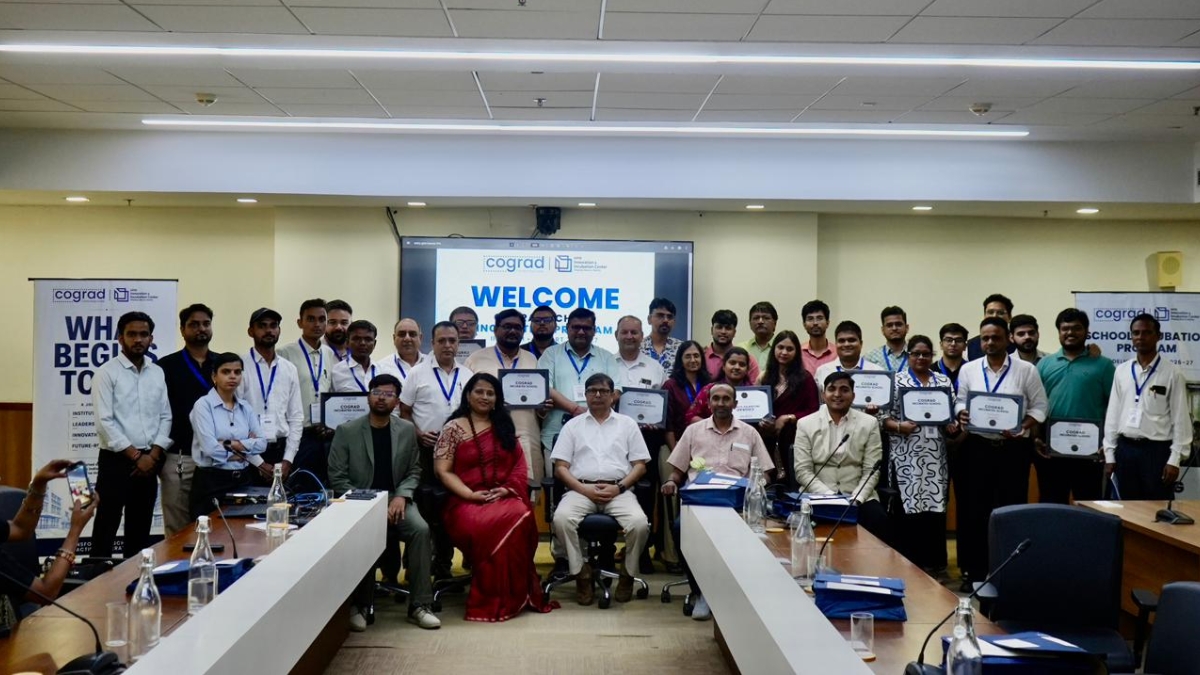
    Distinguished IIM Lucknow faculty deliver the Leadership Programme for Women Professionals via TimesPro’s Direct-to-Device platform, using LIVE online lectures, case studies, peer discussions, simulations and assignments that fit around professional commitments, alongside a three-day on-campus immersion at IIM Lucknow. On successful completion, learners join the IIM Lucknow Executive Alumni network, enhancing their professional visibility, leadership credentials and long-term career opportunities.  

    Women professionals who hold a degree with at least 50 per cent marks and have at least 5 years of work experience, are eligible to apply for the programme. 

    About IIM Lucknow

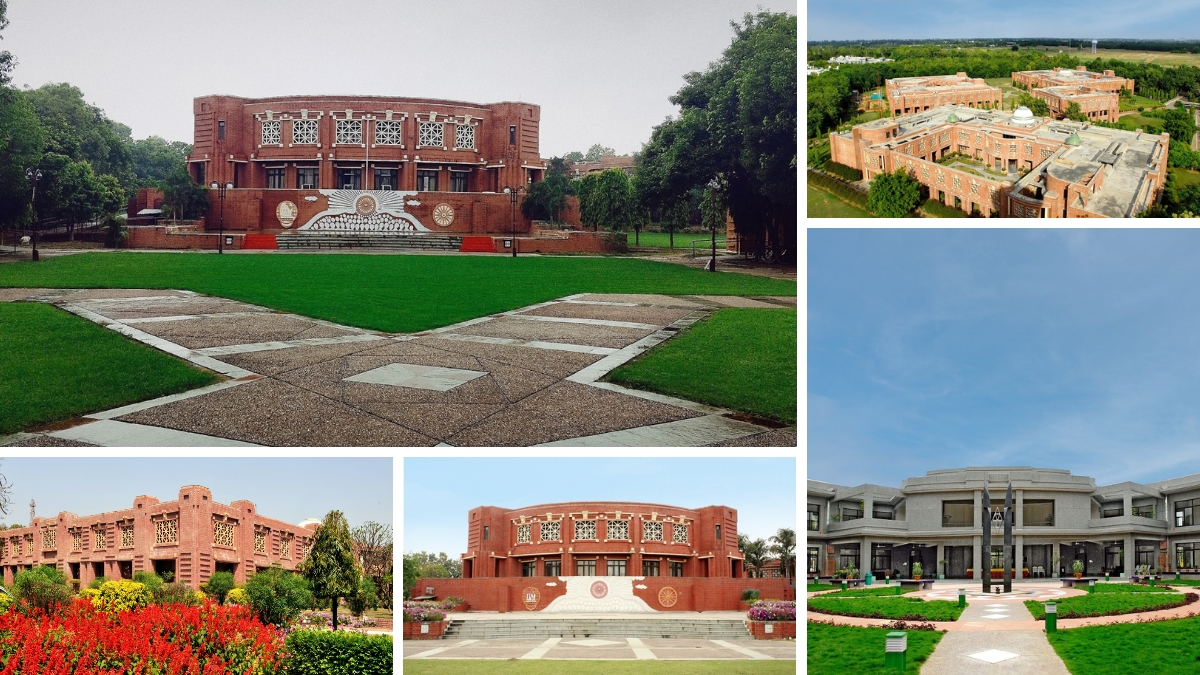
    The Indian Institute of Management Lucknow (IIM Lucknow), ranked 7th in NIRF 2024, stands among India’s premier business schools with global recognition through AACSB, EQUIS, and AMBA accreditations. With a 200-acre main campus in Lucknow and a strategic presence in Noida, the institute delivers world-class management education, high-impact executive programmes, and industry-driven research, shaping leaders for the future of business.  IIM Lucknow

    About TimesPro

    TimesPro, established in 2013, is a leading Higher EdTech platform dedicated to empowering the career growth of aspiring learners by equipping them with skills to rise in a competitive world. TimesPro’s H.EdTech programmes are created to meet the rapidly changing industry requirements and have been blended with technology to make them accessible & affordable.  

    TimesPro offers a variety of created and curated learning programmes across a range of categories, industries, and age groups. They include employment-oriented early career programmes across BFSI, e-Commerce, and technology sectors; executive education for working professionals in collaboration with premier educational institutions like IIMs and IITs; and organisational learning and development interventions at the corporate level. TimesPro also collaborates with India’s leading organisations across varied sectors to provide upskilling and reskilling solutions to boost employability and create a robust workforce. TimesPro is a Higher EdTech initiative by The Times Group. 

    If you object to the content of this press release, please notify us at pr.error.rectification@gmail.com. We will respond and rectify the situation within 24 hours.

  • IIT Delhi Opens Admissions for Batch 2 of Online PG Diploma in Advanced Communication Engineering with Quantum and AI Integration

    IIT Delhi Opens Admissions for Batch 2 of Online PG Diploma in Advanced Communication Engineering with Quantum and AI Integration

    12-month live online programme from IIT Delhi combines AI, quantum networking and advanced wireless communications to build 5G/6G-ready telecom and quantum-safe security talent 

    New Delhi [India], February 25: The Indian Institute of Technology (IIT) Delhi has announced admissions for the second batch of its Online Post Graduate Diploma in Advanced Communication Engineering with Quantum and AI Integration. The Bharti School of Telecommunication Technology and Management at IIT Delhi offers the programme and brings together three transformative technology frontiers—Artificial Intelligence (AI), Quantum Networking and Advanced Wireless Communications.

    The 12-month, live online programme equips learners to solve complex problems across modern telecommunications, intelligent systems and secure network infrastructures. Learners integrate machine learning, advanced wireless communication systems, quantum communication protocols and secure networking techniques to stay ahead in a rapidly evolving technology landscape.

    The curriculum spans 27 academic credits delivered across two semesters, building proficiency in machine learning for network optimisation, secure quantum communications and the deployment of high-efficiency wireless networks using tools and concepts such as MIMO systems, Software-Defined Radios (SDRs) and Quantum Key Distribution (QKD) protocols. Learners can expect to graduate with capabilities aligned to critical roles, including Quantum Communication Engineers, AI & ML Specialists in Telecom, 5G/6G Network Engineers, and Cybersecurity Experts specialising in quantum-safe infrastructures.

    IIT Delhi Opens Admissions for Batch 2 of Online PG Diploma in Advanced Communication Engineering with Quantum and AI Integration-PNN

    Demand for such convergence-led expertise has intensified alongside the steep growth outlook for AI and quantum technologies. A UN Trade and Development (UNCTAD) report projects that the global AI market will rise from $189 billion in 2023 to $4.8 trillion by 2033, representing a 25-fold increase within a decade. Research also anticipates that the quantum communication market could surpass USD 22.09 billion by 2035, growing at over 33% CAGR during 2026–2035.

    Speaking at the announcement, Prof. Manav Bhatnagar, Professor, IIT Delhi said, “Telecom networks now sit at the crossroads of AI-driven automation, quantum-secure trust and ever-denser wireless systems. Through this online PG Diploma, we equip engineers to design, optimise and protect next-generation communication infrastructures—spanning 5G/6G, software-defined radios and quantum key distribution. Learners will graduate with rigorous foundations and applied capability to translate research-grade ideas into deployable solutions for industry and national missions.”

    Learners will also immerse themselves in specialised tools such as VisualQKD Pro, which mirrors practical QKD behaviour by modelling noise effects, QBER trends and eavesdropping scenarios with high fidelity. In addition, learners will work with VisualML Lab Pro and Visual Quantum to interpret raw data patterns, select suitable algorithms for optimum performance and model behaviour, prepare arbitrary quantum states and apply single-qubit gates, respectively.

    The programme suits telecommunications and network engineers, AI and data science professionals, quantum communication specialists and cybersecurity experts, as well as technical managers and decision-makers. After completing the programme, learners can explore roles such as Quantum Communication Engineer, AI & ML Engineer, Wireless Communication Engineer, Network Security Engineer, Software-Defined Radio (SDR) Engineer, Telecommunications Consultant, Research Scientist (AI & Quantum Communication), IoT & Edge Computing Engineer, and Cybersecurity Specialist, among others.

    The 12-month programme runs for over 360 hours, includes a 60-hour capstone project and 30 hours of assignments, and offers a campus immersion experience at IIT Delhi. IIT Delhi delivers sessions live via Direct-to-Device (D2D) mode, supported by lab tutorials and collaborative projects under the guidance of IIT Delhi faculty and industry experts. Participants also receive affiliate alumni status from IIT Delhi, access to the Academic Bank of Credits (ABC) and specialised career services.

    Applicants with BE/BTech/MSc/MCA qualifications in Electronics & Communication Engineering (ECE), Electrical Engineering (EE), Computer Science & Engineering (CSE), Information Technology (IT), Applied Physics / Engineering Physics, Telecommunications Engineering, Mathematics / Applied Mathematics and Data Science / AI & ML are eligible to apply. Working professionals with more than 2 years of experience or more than 5 years of experience, along with a minimum 50% score or 5 CGPA, can also apply.

    About Indian Institute of Technology Delhi:

    Indian Institute of Technology Delhi is one of the 23 IITs created to be Centres of Excellence for training, research and development in science, engineering, and technology in India. Established as College of Engineering in 1961, the Institute was later declared as an Institution of National Importance under the “Institutes of Technology (Amendment) Act, 1963” and was renamed as “Indian Institute of Technology Delhi”. It was then accorded the status of a Deemed University with powers to decide its own academic policy, to conduct its own examinations, and to award its own degrees.

    IIT Delhi has been ranked consistently in top 5 management institutes and rank 1 institute in Research and Professional Practice as per NIRF 2022 and NIRF 2021 Management Category rankings.

    About Bharti School of Telecommunication Technology and Management:

    Bharti Foundation in partnership with Indian Institute of Technology (IIT), Delhi has set up Bharti School of Telecommunication Technology and Management at IIT Delhi. The School has been set up with the vision “to develop telecom leaders through excellence in education and research”. Over the years the School has emerged as a premier institute in developing ‘Young Telecom Leaders’ that will make India a telecom superpower. Bharti School offers PhD, MS(Research), M.Tech(with focus on Telecom Technology and Management), and MBA ( with focus on Telecom systems Management) degrees. The Bharti School provides state-of-the-art labs to its students that are comparable to the best in the world. The school itself is housed in a modern building with very good facilities.Along with that School has been continuously coming up with new programs to maintain a vibrant learning environment since its inception.

    Disclaimer- The press release has been produced on behalf of the Service Provider TimesPro for Continuing Education Programme (CEP), IIT Delhi.


  • Planning for M.Tech in 2026? CEPT University Opens Admissions for Future Architects, Construction and Infrastructure Professionals

    Planning for M.Tech in 2026? CEPT University Opens Admissions for Future Architects, Construction and Infrastructure Professionals

    New Delhi [India], February 25: The Faculty of Technology at CEPT University is inviting applications for its M.Tech admissions 2026 across specialised programs in Construction Engineering and Management, Building Energy Performance and Structural Engineering Design.

    ~ Among the few engineering programs in India following a studio-based pedagogy to expose students to real-world challenges

    ~ Registrations Open till March 31, 2026

    ~ Pre-admission scholarships available for meritorious students

    With a strong focus on mentoring, practice-oriented learning and emerging technologies, CEPT University offers a rigorous pathway for students seeking careers in the rapidly evolving built environment and urban infrastructure sector.

    At the core of CEPT University’s studio-based engineering education is an intensive studio model where small cohorts of 12–15 students work closely with faculty. This ensures individualised attention, hands-on learning and deep engagement with real-world problem statements. The studio experience is complemented by rigorous coursework, interdisciplinary exposure and opportunities for global learning through travel studios and seasonal schools.

    Prof. Aanal Shah, Dean, Faculty of Technology at CEPT University, said, “With India’s construction sector entering a phase of rapid expansion, the need for adaptive, technology-enabled engineers has never been greater. At CEPT University, we are preparing future-ready professionals to respond to emerging industry and environmental challenges.”

    M.Tech Programs at CEPT

    Master’s in Construction Engineering and Management (MCEM)program builds advanced digital, planning and project management capabilities required for today’s construction industry. Graduates are equipped to manage complex construction environments and pursue roles in leading firms, consulting organisations and research.

    Master’s in Building Energy Performance (MBEP) program focuses on energy-efficient building design and climate-responsive architecture through rigorous simulation, experimentation and systems understanding. The only program in India focused on the built environment, MBEP develops graduates who can look at careers in consulting, research, professional practice and policy addressing climate and building performance challenges.

    Master’s in Structural Engineering Design (MSED) program develops advanced expertise across conventional and complex infrastructure systems, including bridges, heavy duty industries , tall buildings and structuralretrofitting, preparing graduates for contemporary structural engineering challenges in today’s urban infrastructure sector.

    Scholarships and Financial Support

    To support deserving students, CEPT University offers means-based and merit-based engineering scholarships , including pre-admission and post-admission support. Three additional scholarships for meritorious girl students have been instituted by CEPT alumni.

    Students can also benefit from CEPT’s ‘Earn While You Learn’ initiative, enabling practical work experience alongside academics.

    For scholarship details, visit: https://cept.ac.in/21/700/student-services/student-financial-aid

    For more information on courses, eligibility criteria and important dates, visit: https://cept.ac.in/ft

    About CEPT University

    CEPT University is a recognized leader in education and research in the areas of architecture, planning, design, technology and urban management. Its teaching programs aim to build thoughtful professionals, and its research programs deepen understanding in its areas of expertise. CEPT University also undertakes advisory projects to supportthe national,state andcitygovernmentsand large sections of private industry. Through its education, research and advisory activities, the University strives to contribute to enriching the lives of people in India’s villages, towns and cities.

    The University comprises five faculties: viz. the Faculty of Architecture, the Faculty of Planning, the Faculty of Technology, the Faculty of Design, and the Faculty of Management. In December 2023, CEPT University was recognized by the Government of India as a Centre of Excellence in Urban Planning and Design. This comes with an endowment of Rs. 250 Crore to be used towards the research and training on India specific knowledge in Urban Planning and Design over the next 25 years. CEPT University was established by the CEPT University Act of 2005 enacted by the government of Gujarat. It was originally started in 1962 as the School of Architecture supported by the Ahmedabad Education Society. The Department of Scientific and Industrial Research (DSIR) of the Government of India recognizes the University as a Scientific and Industrial Research Organization (SIRO). CEPT University is recognized as a Centre of Excellence by the Government of Gujarat. CEPT University has over 30 ongoing collaborations and exchange programs with top-ranked universities across the world.

    If you object to the content of this press release, please notify us at pr.error.rectification@gmail.com. We will respond and rectify the situation within 24 hours.

  • Guidebook by CEPT University’s CWAS on Climate-Resilient Water and Sanitation Services Launched at Mumbai Climate Week

    Guidebook by CEPT University’s CWAS on Climate-Resilient Water and Sanitation Services Launched at Mumbai Climate Week

    Publication provides actionable pathways for cities to integrate water and sanitation  services into climate adaptation and mitigation planning

    New Delhi [India], February 24: Recognising water and sanitation as critical frontiers in the climate challenge, the Center for Water and Sanitation (CWAS) at CEPT Research and Development Foundation (CRDF), CEPT University, launched its guidebook “Moving Towards Climate-Resilient Water and Sanitation Services” at the Mumbai Climate Week.

    The publication was unveiled by Hon. Minister for Environment and Climate Change, Government of Maharashtra, Smt. Pankaja Munde, in the presence of Jayshree Bhoj – Principal Secretary DoECC, Shri Abhijeet Ghorpade- Director State Climate Action Cell DoECC, Mr. Martin Krause –United Nations Environment Program, Mr. Phillipe Sas – Swiss Agency for Development and Cooperation as well as  Professors Emeriti and Senior Advisors at CWAS, Prof. Dinesh Mehta and Prof. Meera Mehta, CWAS Center Heads Dhruv Bhavsar and Aasim Mansuri and the CWAS team- Aditi Dwivedi, Jigisha Jaiswal and Chirag Patel.

    Developed by CWAS in partnership with the Majhi Vasundhara initiative under the Department of Environment and Climate Change, Government of Maharashtra, the guidebook translates on-ground experience into practical guidance for cities. It offers actionable approaches to strengthen resilience and innovation in water and sanitation services, so they remain accessible and equitable under growing climate uncertainty.

    Speaking about the publication, Prof Dinesh Mehta said, “The guidebook emphasises on water security,  integrating circularity in waste management, enabling energy transition within water and sanitation  systems, methane mitigation, strengthening inclusivity, and promoting climate-responsive financing to support cities in adapting to climate change.”

    The publication serves as a ready reference for urban local bodies and practitioners working to future-proof urban water and sanitation systems.

    Sharing her thoughts, Prof Meera Mehta said, “CWAS has been providing advisory and technical support to the Government of Maharashtra for over 15 years on improved service delivery for water and sanitation. This guidebook aims to serve local bodies with implementable approaches to address their needs for climate-responsive water and sanitation services. We invite local governments to explore this guidebook, adapt it to their unique circumstances, and join us in this essential journey toward a climate-resilient future.”

    Centre Heads Dhruv Bhavsar and Aasim Mansuri said, “CWAS has worked closely with cities and villages across Maharashtra, alongside state departments, to strengthen water, sanitation, and waste services through monitoring, technical support, and capacity building. The approaches in this guidebook are field-tested and adaptable across states. We hope this contribution supports governments in advancing climate resilient water and sanitation service delivery.”

    The guidebook is available here: https://cwas.org.in/cwas-resources/moving-towards-climate-resilient-water-and-sanitation-services

    About CEPT University

    CEPT University is a recognized leader in education and research in the areas of architecture, planning, design, technology and urban management. Its teaching programs aim to build thoughtful professionals and its research programs deepen understanding in its areas of expertise. CEPT University also undertakes advisory projects to support the national, state and city governments and large sections of private industry. Through its education, research and advisory activities, the University strives to contribute to enriching the lives of people in India’s villages, towns and cities.

    The University comprises five faculties: viz. the Faculty of Architecture, the Faculty of Planning, the Faculty of Technology, the Faculty of Design, and the Faculty of Management. In December 2023, CEPT University was recognized by the Government of India as a Centre of Excellence in Urban Planning and Design. This comes with an endowment of Rs. 250 Crore to be used towards the research and training on India specific knowledge in Urban Planning and Design over the next 25 years.

    CEPT University was established by the CEPT University Act of 2005 enacted by the government of Gujarat. It was originally started in 1962 as the School of Architecture supported by the Ahmedabad Education Society. The Department of Scientific and Industrial Research (DSIR) of the Government of India recognizes the University as a Scientific and Industrial Research Organization (SIRO). CEPT University is recognized as a Center of Excellence by the Government of Gujarat. CEPT University has over 30 ongoing collaborations and exchange programs with top-ranked universities across the world.

    If you object to the content of this press release, please notify us at pr.error.rectification@gmail.com. We will respond and rectify the situation within 24 hours.

  • Powering Talent, Innovation and Industry: A New UK–India Collaboration Framework

    Powering Talent, Innovation and Industry: A New UK–India Collaboration Framework

    New Delhi [India], February 24: Birmingham City University (BCU), one of the United  Kingdom’s leading practice-led institutions, is currently in New Delhi to engage with  students, parents, academic partners and policymakers, reinforcing its long-term  commitment to India. 

    Addressing stakeholders during the visit, Professor David Mba, Vice-Chancellor of  BCU, emphasised that the UK–India education partnership must evolve from traditional  student mobility to deeper collaboration, co-creation and shared innovation.

    India Central to BCU’s Vision 

    India is a priority partner in BCU’s Strategy 2030 vision of developing future-ready talent  and powering prosperity through knowledge. More than 2,000 Indian students are  currently enrolled at BCU’s Birmingham campus, making India one of the University’s  largest international communities. 

    BCU’s programmes are designed in close collaboration with global industry leaders  including Microsoft, Amazon, Cisco and Jaguar Land Rover. This ensures students gain  hands-on exposure in high-growth sectors such as artificial intelligence, cybersecurity,  digital infrastructure, advanced manufacturing, sustainable mobility and green  transition. 

    Birmingham City University (BCU)

    Academic & Research Collaboration 

    Beyond admissions, BCU is actively engaged in research and innovation partnerships  across India. The University has delivered impactful initiatives such as the MSc  Advancing Diabetes Care programme, which has upskilled doctors across India through  accessible online learning. In addition, BCU is involved in multiple collaborative research  projects spanning climate resilience, smart cities, digital security and creative industries. 

    These initiatives are supported by organisations including UK Research and Innovation,  the British Council and the British Academy, reflecting robust institutional ties between  the two nations. 

    Addressing Student Concerns 

    During interactions with media and parents, the University leadership addressed key  concerns frequently raised: 

    • Visa & Post-Study Work: The UK continues to welcome genuine students, with  structured visa pathways and the Graduate Route enabling post-study work  opportunities. 
    • Value for Investment: BCU’s industry-aligned curriculum and employability focus  ensure students gain practical skills and strong career outcomes. 
    • Quality Assurance: Any transnational education models maintain rigorous UK  academic standards.
    • Student Safety & Support: Birmingham is a diverse and student-friendly city, with  comprehensive academic and welfare support systems in place.

    Birmingham City University (BCU)

    Strengthening Long-Term Engagement 

    BCU’s engagement with India extends beyond academics. During the 2022  Commonwealth Games, BCU students designed the medals awarded to athletes, reflecting the University’s creative excellence and global outlook. 

    The University is also establishing a BCU alumni chapter in New Delhi to foster  mentoring, professional networking and enduring institutional connections. 

    As competition among global study destinations intensifies, Birmingham City University  positions itself as a partner in progress—focused on employability, innovation and  sustainable collaboration. 

    The visit to New Delhi signals a clear message: BCU is committed not just to recruiting  Indian students, but to building a forward-looking partnership that benefits both India  and the United Kingdom.

    If you object to the content of this press release, please notify us at pr.error.rectification@gmail.com. We will respond and rectify the situation within 24 hours.

  • IDT Students Showcase Unique Creativity in Surat: Futuristic Tree Based on “Future is Now” Theme Becomes Major Attraction Lippan Art Workshop Held on 22 February; Bandhej Workshop Scheduled for 28 February

    IDT Students Showcase Unique Creativity in Surat: Futuristic Tree Based on “Future is Now” Theme Becomes Major Attraction Lippan Art Workshop Held on 22 February; Bandhej Workshop Scheduled for 28 February

    Surat (Gujarat) [India], February 24:  Students of IDT – Institute of Design and Technology have created a unique and thought-provoking sculpture under the Dumas Art Festival based on the theme “Future is Now.” The installation beautifully represents the deep connection between nature and technology in the present era. This special artistic creation is currently on display at VR Surat until 28 February, where it has become a major attraction for visitors.

    The Futuristic Tree, developed after nearly one month of dedicated effort by a team of around 10 students, conveys the concept that nature and technology are inseparably interconnected. The sculpture reflects the idea that technology is no longer separate from human life but has become an integral part of our ecosystem.

    Inspired by the vision of “Future is Now,” the installation symbolizes the harmony between nature and modern innovation. Its design highlights the message that the future is not a distant imagination but a present reality, where technology plays a significant role in shaping our environment, lifestyle, and thought processes.

    The project was developed under the guidance of faculty member Mr. Sameer Dave. The primary objective of this initiative was to encourage students to develop innovative thinking and express contemporary themes through artistic mediums. Visitors have widely appreciated this unique installation, describing it as a powerful and immersive visual experience. The sculpture invites citizens to explore the relationship between the future, nature, and technology from a fresh perspective.

    In addition, IDT Surat has also organized special workshops during the Dumas Art Festival to promote art and traditional crafts. A Lippan Art Workshop was successfully conducted on 22 February, where participants learned the traditional mirror work art of Kutch. Furthermore, a Bandhej (Tie-and-Dye) Workshop is scheduled for 28 February, offering participants hands-on experience with this traditional textile technique.

    If you object to the content of this press release, please notify us at pr.error.rectification@gmail.com. We will respond and rectify the situation within 24 hours.