Tag: Education

  • ABBS Ranked No. 1 Among Top BBA Colleges of Eminence and 6th Among Top Law Schools of Excellence in GHRDC Survey 2026

    ABBS Ranked No. 1 Among Top BBA Colleges of Eminence and 6th Among Top Law Schools of Excellence in GHRDC Survey 2026

    Bengaluru (Karnataka) [India], May 14: ABBS has once again strengthened its position as one of India’s leading higher education institutions with remarkable recognition in the prestigious GHRDC Survey 2026. The institution has been acknowledged for its exceptional contribution to management and legal education, earning top rankings at the national, state, and regional levels. The latest rankings reaffirm ABBS’s commitment to delivering industry-oriented education, academic innovation, and holistic student development.

    Rankings Achieved by ABBS in GHRDC Survey 2026:

    Acharya Bangalore B School (ABBS) – BBA

    • 1st Rank among Top BBA Colleges of Eminence in India
    • 5th Rank in the State of Karnataka
    • 6th Rank in the Southern Region

    ABBS School of Law – Law

    • 6th Rank among Top Law Schools of Excellence in India
    • 9th Rank in the State of Karnataka
    • 10th Rank in the Southern Region

    The recognitions were awarded by the Global Human Resource Development Centre (GHRDC), New Delhi, one of India’s leading education rating and assessment bodies. Institutions are evaluated on key parameters including academic quality, faculty excellence, placements, industry interaction, infrastructure, innovation, leadership development, and student outcomes.

    Acharya Bangalore B School has consistently distinguished itself through its future-focused curriculum, experiential learning model, industry collaborations, global exposure opportunities, and strong placement ecosystem. The institution continues to prepare students to excel in dynamic business environments through leadership training, live projects, entrepreneurial initiatives, and corporate engagement.

    Similarly, ABBS School of Law has emerged as a progressive centre for legal education by combining academic rigour with practical legal exposure. Through moot courts, legal aid initiatives, research-driven learning, and contemporary legal specialisations, the institution is nurturing socially responsible and professionally competent legal professionals.

    “Being recognised in the GHRDC Survey 2026 is a proud moment for the entire ABBS community. These rankings are a reflection of the collective dedication and hard work of our faculty, students, alumni, recruiters, and academic partners. At ABBS, we remain committed to building a culture of excellence, innovation, and impact-driven education that empowers students to become future-ready leaders,” said Mr. Ajitesh Basani, Executive Director, ABBS, Bengaluru.

    With these latest recognitions, ABBS continues to strengthen its position as one of India’s emerging centres of excellence in higher education, setting new benchmarks in management and legal studies while empowering students to become future-ready leaders.

    About ABBS

    ABBS is an autonomous institute affiliated with Bangalore University and approved by AICTE. ABBS is accredited by NAAC with an ‘A’ Grade for three consecutive cycles and by IACBE, USA for the second time. The programmes at ABBS are designed so that students gain nearly 70% of their learning outside the classroom. As an autonomous institution, ABBS regularly revises its curriculum to keep it innovative and aligned with industry expectations.

    If you object to the content of this press release, please notify us at pr.error.rectification@gmail.com. We will respond and rectify the situation within 24 hours.

  • Imperial College London announces STEMathon 3.0, calling India’s most ambitious students to solve real world challenges

    New Delhi [India], May 14: STEMathon brings together some of India’s brightest young minds, challenging them to apply their STEM learning to real-world issues. The programme inspires independent thinking, collective problem solving, and innovation rooted in science and technology. Guided by the United Nations Sustainable Development Goals (SDGs), it nurtures the next generation of innovators poised to make a meaningful global impact.

    Imperial College London stands among the world’s most prestigious universities, consistently ranked within the global top ten for its excellence in science, engineering, medicine, and business. With a heritage of over a century of pioneering research and a reputation for translating ideas into tangible breakthroughs, Imperial has shaped fields from artificial intelligence and climate science to sustainable energy and healthcare innovation. Through STEMathon, this expertise is brought directly to Indian classrooms, offering students an authentic opportunity to experience Imperial’s approach to inquiry and creativity and collective thinking.

    The 2025 edition of STEMathon drew participation from over 99 teams representing some of India’s most respected schools. Their solutions addressed challenges in sustainability, healthcare, energy efficiency, and technology-driven development demonstrating the competition’s growing influence and the remarkable potential of India’s young innovators.

    Building on this momentum, the 2026 STEMathon will culminate in a grand finale in Mumbai from 20th to 22nd November. The top teams will present their projects before an expert panel and engage directly with Imperial faculty, bridging global academic insight with practical experience.

    The competition welcomes students from Grades 10 to 12 enrolled in CBSE, ICSE, IB, and Cambridge boards across India. With registrations now open for the 2026 edition, Imperial’s Schools STEMathon continues to expand its reach, empowering the scientists, engineers, and thinkers of tomorrow to confront global challenges and contribute solutions that reflect both local ingenuity and world-class scientific values.

    If you object to the content of this press release, please notify us at pr.error.rectification@gmail.com. We will respond and rectify the situation within 24 hours.

  • Dr. RVR NRIU Attains Deemed-to-be University Status, Expands Vision for Global Education Excellence

    Dr. RVR NRIU Attains Deemed-to-be University Status, Expands Vision for Global Education Excellence

    Dr. RVR NRIU’s Deemed-to-be University status marks a major achievement, advancing academic excellence, innovation, research, and industry-focused education in Andhra Pradesh.

    New Delhi [India], May 12: In a significant milestone for higher education in Andhra Pradesh, Dr. RVR NRIU has officially attained the status of a Deemed-to-be University, marking a new chapter in its journey of academic excellence, innovation, and student-focused learning.

    Formerly known as NRI Institute of Technology, the institution stated that the transformation reflects its long-standing commitment to creating a respected and dependable educational ecosystem that nurtures capable, responsible, and future-ready professionals. Recognised by the University Grants Commission and the Ministry of Education, the university aims to strengthen its focus on quality education, research, and industry-oriented learning.

    Future-Focused Education

    Spread across a sprawling 30-acre eco-friendly campus, Dr. RVR NRIU offers a modern academic environment supported by advanced laboratories, state-of-the-art infrastructure, and future-focused learning facilities. The university currently offers a wide range of B.Tech, M.Tech, and MBA programmes with specialisations in emerging fields such as Artificial Intelligence & Machine Learning, Data Science, Cyber Security, Electronics & Communication Engineering, Information Technology, and more.

    Research, Innovation & Industry-Oriented Learning

    The university emphasises a student-centric learning model that combines rigorous academics with research, innovation, and practical exposure. Strong industry collaborations with leading companies and multinational corporations provide students with opportunities for internships, workshops, and live projects, helping bridge the gap between classroom learning and professional careers.

    Expert Faculty & Personalised Mentorship

    The institution also highlighted its focus on personalised learning and placement training, enabling students to develop leadership skills, confidence, discipline, and career readiness. According to the management, the university’s mentoring approach allows students to learn at their own pace under the guidance of experienced and highly qualified faculty members.

    Vibrant Campus Life 

    Apart from academics, Dr. RVR NRIU offers a vibrant campus life enriched with cultural celebrations, technical events, student clubs, reunions, and recreational activities designed to encourage talent, creativity, and self-confidence. On-campus healthcare facilities with attending doctors are also available to ensure student well-being.

    A Home-Like Feeling

    The university has separate hostels for boys and girls with spacious rooms, hygienic dining facilities, reading rooms, TV lounges, and attentive wardens to create a safe and comfortable “home away from home” experience for students.

    Healthy Bodies, Healthy Minds

    Sports and fitness are another major focus area at the university. Students are encouraged to participate in cricket, football, hockey, badminton, and table tennis, while a fully equipped gymnasium and yoga facilities promote physical and mental wellness. Professional trainers and instructors support students in maintaining an active and balanced lifestyle.

    Committed to Academic Excellence

    Established under the aegis of the Sri Durga Malleshwari Educational Society, the institution has steadily grown over the years, with reputed constituent institutions such as NRI College of Pharmacy and NRI Institute of Technology contributing to its strong academic foundation.

    With its transition into a Deemed-to-be University, Dr. RVR NRIU reaffirmed its commitment to shaping future leaders through globally relevant education, innovation-driven learning, and holistic student development.

    Please visit: https://rvrnriuniversity.edu.in/

    If you object to the content of this press release, please notify us at pr.error.rectification@gmail.com. We will respond and rectify the situation within 24 hours.

  • IIT Delhi Invites Applications for Second Batch of Online PG Diploma in Healthcare Product Development and Management

    IIT Delhi Invites Applications for Second Batch of Online PG Diploma in Healthcare Product Development and Management

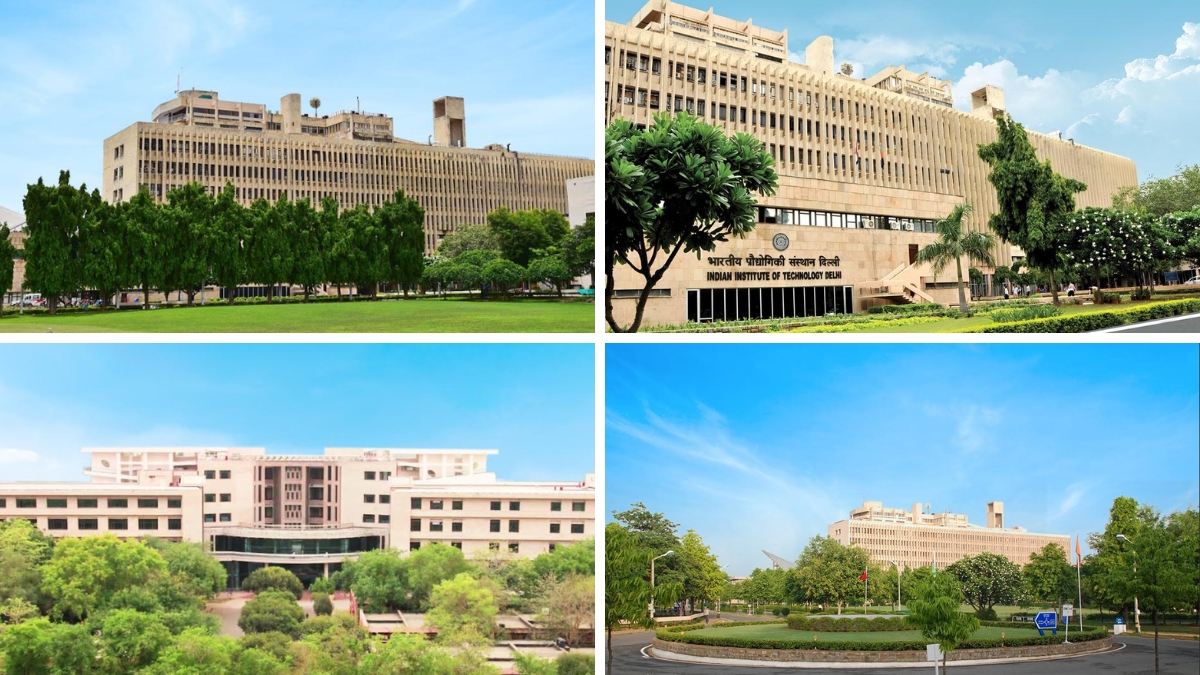
    New Delhi [India], May 12: The Indian Institute of Technology Delhi (IIT Delhi) has invited applications for the second cohort of its Online Postgraduate Diploma in Healthcare Product Development and Management, offered by the Centre for Biomedical Engineering. Designed at the intersection of healthcare, engineering, innovation, and enterprise, the programme equips learners with the knowledge and applied skills needed to conceptualise, develop, and take healthcare products to market. Its multidisciplinary framework brings together biomedical science, regulatory understanding, product strategy, and commercialisation, preparing professionals to contribute meaningfully to India’s evolving healthcare innovation ecosystem.

    The 12-month Online Postgraduate Diploma in Healthcare Product Development and Management suits professionals and aspiring specialists across the healthcare product ecosystem, whether they work in biotechnology research, healthcare entrepreneurship, medical technology or regulatory functions. The programme builds role-ready competencies for careers in biotech, medical devices, pharmaceuticals, healthcare IT and digital health innovation. It also strengthens foundational understanding of human anatomy and disease pathways to inform product conceptualisation, develops practical knowledge of materials and mechatronics for healthcare applications and sharpens the ability to evaluate emerging research directions and innovation opportunities in healthcare product development. 

    India’s healthcare sector continues to expand rapidly, driven by population density, access gaps and an accelerating push towards technology-led delivery. Estimates indicate India requires 2.4 million additional hospital beds, translating into approximately 2 billion square feet of healthcare infrastructure to move towards global standards. Brickwork Ratings has projected that India’s hospital sector could reach USD 202.5 billion by 2030, from an estimated USD 122.30 billion in 2025, supported by rising demand, private investment, government initiatives and the adoption of technologies such as AI and telemedicine. AI’s share of the healthcare market is projected to exceed 30% by 2030, up from approximately 15% currently. In parallel, the wearable medical devices market is projected to grow to USD 184.75 billion by 2033, from USD 42.1 billion in 2024, propelled by consumer adoption, healthcare digitalisation, and intelligent monitoring technologies. 

    Speaking on the announcement of the second batch, Prof. Arnab Chanda, Programme Coordinator, IIT Delhi, said, “India’s healthcare growth demands professionals who can build products with scientific depth and real-world viability. 

    This diploma trains learners to move from unmet clinical needs to validate, compliant and commercially scalable solutions. We bring together engineering, clinical perspective and product strategy through rigorous coursework, practical projects and expert-led teaching, so participants can deliver innovations that stand up to regulatory and market expectations.”

    Graduates, postgraduates, and working professionals with BE/BTech/BCA/BIT in any engineering discipline or equivalent, BSc (or equivalent) in life sciences and related basic sciences, and MBBS, BDS, BPharm or allied disciplines can apply. The programme also considers professionals from healthcare, biomedical, biotech, or related industries with BE/BTech/BSc/Diploma in Engineering/MBA/MCA qualifications. Participants can pursue roles such as Healthcare Product Manager, Medical Technology Consultant, Regulatory Affairs Specialist, Health Data Analyst, among others. 

    The year-long programme includes 450+ hours of learning, comprising 200 hours of live online sessions, 120 hours of practical work and projects, and a two-day campus immersion. The curriculum spans 18 academic credits across two semesters and includes eight modules, covering topics such as Mechanics of Biomaterials, Biofabrication, Research Techniques in Biomedical Engineering, Soft Tissue Characterisation and Applications, Healthcare Wearables Design and Applications, and Healthcare Entrepreneurship and Management, among others. Learners also work with tools such as Pick 3D Printer, AutoCAD, and UX/UI platforms.

    Delivered by IIT Delhi faculty and industry experts, including eminent healthcare industry experts, the programme runs through live, interactive online classes and combines academic rigour with practical application. Participants engage in real-time simulations, case-based analyses and hands-on projects, with an optional two-day campus immersion designed to deepen peer learning and professional exchange. On successful completion, learners receive Affiliate Alumni Status.

    About the Indian Institute of Technology Delhi: 

    Indian Institute of Technology Delhi is one of the 23 IITs created to be Centres of Excellence for training, research, and development in science, engineering, and technology in India. Established as the College of Engineering in 1961, the Institute was later declared as an Institution of National Importance under the “Institutes of Technology (Amendment) Act, 1963” and was renamed as “Indian Institute of Technology Delhi”. It was then accorded the status of a Deemed University with powers to decide its own academic policy, to conduct its own examinations, and to award its own degrees.

    IIT Delhi has been ranked consistently in top 5 management institutes and rank 1 institute in Research and Professional Practice as per NIRF 2022 and NIRF 2021 Management Category rankings.

    Centre for Biomedical Engineering, IIT Delhi

    The Centre for Biomedical Engineering (CBME) was established in 1971 as a joint venture of the Indian Institute of Technology Delhi and the All India Institute of Medical Sciences (AIIMS), Delhi. The key focus of the centre has been on the application of engineering principles to address healthcare problems. Currently, the centre has 17 faculty members who are dedicated to teaching and research in the areas of Biomaterials, Bioinstrumentation, Biomechanics, Medical Imaging, and Medical Implants.

    The centre offers a wide range of PG programs (Ph.D., M.Tech, and MS (Research)), Executive Programs (Healthcare Entrepreneurship, Healthcare for Industry 5.0, and Robotics), Fellowship Programs (School of Biodesign and WIPO Global Health Innovation), UG courses in Healthcare Engineering, and a Minor in Biomedical Engineering.

    Over the years, CBME has established strong relations with many hospitals and medical institutes in the NCR region and has trained students in emerging areas of healthcare product design and development, clinical translation, and entrepreneurship, with a focus on conception-to-commercialization of healthcare technologies, through executive and Swayam-NPTEL-based courses.

    This one-of-its-kind ecosystem has led students, faculty, and mentors from AIIMS to join hands to invent products and processes, file patents, and initiate technology translation and healthcare startups.

    For more details, please visit: https://cbme.iitd.ac.in/

    [The press release has been issued on behalf of the Service Provider TimesPro for the Centre for Biomedical Engineering at IIT Delhi.]

  • IIT Delhi Invites Applications for Second Cohort of Online PG Diploma in Advanced Communication Engineering with AI and Quantum Integration

    IIT Delhi Invites Applications for Second Cohort of Online PG Diploma in Advanced Communication Engineering with AI and Quantum Integration

    The 12-month live online programme equips professionals with future-ready expertise in AI-led network optimisation, quantum communication, 5G/6G systems, and quantum-safe security infrastructure

    New Delhi [India], May 12: As communication networks become increasingly intelligent, software-defined, and security-intensive, the Indian Institute of Technology (IIT) Delhi has invited applications for the second cohort of its Online Post Graduate Diploma in Advanced Communication Engineering with Quantum and AI Integration. Offered by the Bharti School of Telecommunication Technology and Management at IIT Delhi, the programme has been designed for engineers and technology professionals seeking advanced capability at the intersection of Artificial Intelligence, Quantum Networking, and next-generation wireless communication systems.

    The 12-month, live online programme equips learners to solve complex problems across modern telecommunications, intelligent systems, and secure network infrastructures. Learners integrate machine learning, advanced wireless communication systems, quantum communication protocols, and secure networking techniques to stay ahead in a rapidly evolving technology landscape. 

    The curriculum spans 27 academic credits delivered across two semesters, building proficiency in machine learning for network optimisation, secure quantum communications, and the deployment of high-efficiency wireless networks using tools and concepts such as MIMO systems, Software-Defined Radios (SDRs), and Quantum Key Distribution (QKD) protocols. Learners can expect to graduate with capabilities aligned to critical roles, including Quantum Communication Engineers, AI & ML Specialists in Telecom, 5G/6G Network Engineers, and Cybersecurity Experts specialising in quantum-safe infrastructures.

    Demand for such convergence-led expertise has intensified alongside the steep growth outlook for AI and quantum technologies. A UN Trade and Development (UNCTAD) report projects that the global AI market will rise from $189 billion in 2023 to $4.8 trillion by 2033, representing a 25-fold increase within a decade. Research also anticipates that the quantum communication market could surpass USD 22.09 billion by 2035, growing at over 33% CAGR during 2026–2035.

    Speaking at the announcement, Prof. Manav Bhatnagar, Professor, IIT Delhi, said, “Telecom networks now sit at the crossroads of AI-driven automation, quantum-secure trust, and ever-denser wireless systems. Through this online PG Diploma, we equip engineers to design, optimise, and protect next-generation communication infrastructures—spanning 5G/6G, software-defined radios, and quantum key distribution. Learners will graduate with rigorous foundations and applied capability to translate research-grade ideas into deployable solutions for industry and national missions.”

    Learners will also immerse themselves in specialised tools such as VisualQKD Pro, which mirrors practical QKD behaviour by modelling noise effects, QBER trends, and eavesdropping scenarios with high fidelity. In addition, learners will work with VisualML Lab Pro and Visual Quantum to interpret raw data patterns, select suitable algorithms for optimum performance and model behaviour, prepare arbitrary quantum states, and apply single-qubit gates, respectively.

    The programme suits telecommunications and network engineers, AI and data science professionals, quantum communication specialists, and cybersecurity experts, as well as technical managers and decision-makers. After completing the programme, learners can explore roles such as Quantum Communication Engineer, AI & ML Engineer, Wireless Communication Engineer, Network Security Engineer, Software-Defined Radio (SDR) Engineer, Telecommunications Consultant, Research Scientist (AI & Quantum Communication), IoT & Edge Computing Engineer, and Cybersecurity Specialist, among others. 

    The programme runs for over 360 hours, includes a 60-hour capstone project and 30 hours of assignments, and offers a campus immersion experience at IIT Delhi. IIT Delhi delivers sessions live via Direct-to-Device (D2D) mode, supported by lab tutorials and collaborative projects under the guidance of IIT Delhi faculty and industry experts. Participants also receive affiliate alumni status from IIT Delhi, access to the Academic Bank of Credits (ABC), and specialised career services.

    Applicants with BE/BTech/MSc/MCA qualifications in Electronics & Communication Engineering (ECE), Electrical Engineering (EE), Computer Science & Engineering (CSE), Information Technology (IT), Applied Physics / Engineering Physics, Telecommunications Engineering, Mathematics / Applied Mathematics and Data Science / AI & ML are eligible to apply. Working professionals with more than 2 years of experience or more than 5 years of experience, along with a minimum 50% score or 5 CGPA, can also apply. 

    About Indian Institute of Technology Delhi: 

    Indian Institute of Technology Delhi is one of the 23 IITs created to be Centres of Excellence for training, research, and development in science, engineering, and technology in India. Established as the College of Engineering in 1961, the Institute was later declared as an Institution of National Importance under the “Institutes of Technology (Amendment) Act, 1963” and was renamed as “Indian Institute of Technology Delhi”. It was then accorded the status of a Deemed University with powers to decide its own academic policy, to conduct its own examinations, and to award its own degrees.

    IIT Delhi has been ranked consistently in the top 5 management institutes and ranked as the 1st institute in Research and Professional Practice as per NIRF 2022 and NIRF 2021 Management Category rankings.

    About Bharti School of Telecommunication Technology and Management:

    Bharti Foundation in partnership with the Indian Institute of Technology (IIT), Delhi has set up Bharti School of Telecommunication Technology and Management at IIT Delhi. The School has been set up with the vision “to develop telecom leaders through excellence in education and research”. Over the years, the School has emerged as a premier institute in developing ‘Young Telecom Leaders’ that will make India a telecom superpower. Bharti School offers PhD, MS(Research), M.Tech(with focus on Telecom Technology and Management), and MBA ( with focus on Telecom Systems Management) degrees. The Bharti School provides state-of-the-art labs to its students that are comparable to the best in the world. The school itself is housed in a modern building with very good facilities. Along with that, the school has been continuously coming up with new programs to maintain a vibrant learning environment since its inception.

    Disclaimer: The press release has been produced on behalf of the Service Provider TimesPro for the Continuing Education Programme (CEP), IIT Delhi.

  • IPMAT Rohtak 2026 Concludes Successfully Across Examination Centres; LPT Releases Initial Exam Analysis

    IPMAT Rohtak 2026 Concludes Successfully Across Examination Centres; LPT Releases Initial Exam Analysis

    Authored by Mr. Sagar Joshi, founder of Law Prep Tutorial

    New Delhi [India], May 11: The Indian Institute of Management Rohtak successfully conducted the IPMAT Rohtak 2026 examination today for admissions into its 5-Year Integrated Programme in Management (IPM). The examination witnessed participation from aspirants across multiple cities nationwide.

    The examination was conducted during the morning slot from 9:00 AM to 11:00 AM, with reporting and gate closure scheduled for 8:30 AM. Several students noted that the early timing proved relatively convenient amid the ongoing summer conditions, particularly when compared to examinations such as IPMAT Indore 2026, which was conducted during peak afternoon hours.

    Following the examination, the academic team at LPT released its preliminary analysis based on student feedback, mentor reviews, and memory-based discussions collected immediately after the test.

    According to LPT’s first-cut assessment, the overall difficulty level of the paper was easy to moderate, with the examination displaying a noticeable emphasis on accuracy.

    Exam Pattern Overview

    The paper consisted of the following sections:

    • Quantitative Ability
    • Logical Reasoning
    • Verbal Ability

    The total duration of the examination was 120 minutes, and the paper followed the pattern prescribed by IIM Rohtak for the 2026 admission cycle i.e. 40 questions per section. Each question in the examination carried 4 marks, with a penalty of 1 mark for every incorrect response. All questions in the paper were multiple-choice in nature.

    Additionally, candidates who opted for the Integrated Programme in Law (IPL) during registration were required to appear for an additional Legal Reasoning section comprising 20 questions with a sectional duration of 20 minutes. Similar to the core IPMAT paper, each question carried 4 marks with a negative marking of 1 mark for every incorrect response.

    Section-Wise Analysis

    Quantitative Ability (QA)

    The Quantitative Ability section was observed to be easy in terms of overall difficulty. Major question distribution was reported from topics such as:

    • Arithmetic
    • PnC and Probability
    • Geometry
    • Number System

    Students particularly found questions from arithmetic, PnC, and Number System to be direct and easy.

    Logical Reasoning (LR)

    The Logical Reasoning section largely covered questions based on syllogisms, seating arrangement, DI sets, which were easy and doable.

    According to initial student reactions, this section was also easy despite a couple of questions based on general knowledge.

    Verbal Ability (VA)

    The Verbal Ability section featured questions from:

    • Reading Comprehension [One passage]
    • Vocabulary
    • Grammar Usage
    • Para Jumbles

    The section was considered to be moderate as compared to the other two, with the Reading Comprehension passage being short and based on the Iran-USA war. In this section, too, general awareness made an entry. The vocabulary questions are expected to be the game-changer.

    Initial Attempt and Cutoff Indicators

    Based on previous years’ trends and initial student feedback, a good attempt for the paper is expected to range between 100 and 105 attempts with an accuracy benchmark of approximately 85-90%.

    Experts also believe that cutoff trends this year are likely to remain similar to or slightly higher than the previous admission cycle, depending upon the overall difficulty level of the paper, candidate performance distribution, and the normalization process.

    Expert Commentary

    Students who maintained composure and avoided unnecessary risks are likely to hold an advantage during the cutoff stage. We expect the competition at higher score ranges to remain intense, particularly if the overall paper is perceived as student-friendly across centres, said [NAME], [Designation] from LPT.

    Student Reactions

    Students appearing for the examination described the paper as easily doable. Many candidates stated that the overall paper was approachable for well-prepared aspirants despite a few time-consuming questions in the verbal section.

    Interview Prep

    With the written examination phase now concluded, focus is expected to shift towards the Personal Interview (PI) stage of the admission process. As per the admission process outlined by IIM Rohtak for the 2026 cycle, calls for the Personal Interview are tentatively expected to be announced by the end of May 2026, while the interview process itself is likely to be conducted during the first or second week of June 2026.

    The final merit list will be prepared using a composite score comprising IPMAT performance (55%), Personal Interview evaluation (15%), Class X academic performance (10%), and Class XII academic performance (20%).

    LPT will shortly commence its PI preparation and mentorship support for shortlisted candidates, covering interview strategy, communication skills, current affairs discussions, mock interviews, and profile-based guidance aligned with the evaluation parameters, followed by IIM Rohtak.

    About LPT

    LPT is an education and test-preparation platform focused on management entrance examinations, including IPMAT, JIPMAT, CUET, and other undergraduate aptitude-based programs. The institute regularly publishes exam analyses, preparation resources, mentorship programs, and admission guidance for aspirants across India.

    For more information, please refer to:
    https://www.youtube.com/live/mwEXEpXOjHE?si=-9OQyky6TyRuUayg 

    https://www.youtube.com/live/RfNu7Wf8-6g?si=ucBDicL7PJchH7DV

    If you object to the content of this press release, please notify us at pr.error.rectification@gmail.com. We will respond and rectify the situation within 24 hours.

  • At IIT Roorkee’s COMET’26, eduVelocity Guides Students on Strategic Global Education Planning

    At IIT Roorkee’s COMET’26, eduVelocity Guides Students on Strategic Global Education Planning

    Roorkee (Uttarakhand) [India], May 11: A growing shift among India’s top students from aspirational to strategic overseas education planning was on display at IIT Roorkee’s flagship career fest, COMET’26. The event, organized by the Career Development Cell (CDC), the event reflected IIT Roorkee’s continued emphasis on industry engagement, professional development, and global exposure, while providing students with opportunities to align their global education aspirations with long-term career goals.

    The two-day fest, held on April 11–12, hosted major industry names including Apple, JPMorgan Chase, Bain & Co., CampusX, and NSE, and featured high-impact workshops, panel discussions, and networking sessions with industry leaders who shared insights, experience, and transformative learning.

    One of the silver sponsors, global education counseling firm eduVelocity Global, conducted an interactive postgraduate (PG) planning seminar to address this evolving student interest. More than 150 students attended the session led by Vinu Warrier, Founder and Managing Partner, and Riya Baid, Manager and Strategist, Post Graduate Admissions. The discussions focused on practical aspects such as program selection, application strategy, and building competitive profiles.

    “We are seeing a clear shift in mindset. Students today are not just asking where to study, but why, and what it leads to. That clarity is shaping how they approach global education,” said Mr. Warrier.

    The participation levels at COMET’26 highlight a broader trend where students from premier institutes are increasingly seeking structured, outcome-driven guidance as global education pathways become more competitive and career-focused.

    The response extended beyond the workshops, with students visiting the eduVelocity stall for one-on-one interactions, resume evaluations, and personalized guidance. Several students also participated in aptitude-based activities, receiving support with testing and interviews. Following the main event, a dedicated PG aptitude testing and counseling session was held for MBA students on April 17, with further group sessions scheduled for April 24 and 25.

    If you object to the content of this press release, please notify us at pr.error.rectification@gmail.com. We will respond and rectify the situation within 24 hours.

  • MIT University Sikkim Opens Admissions 2026 with AI-Based Class, Real Industry Exposure, Workshops, Internships, and Practical Learning

    MIT University Sikkim Opens Admissions 2026 with AI-Based Class, Real Industry Exposure, Workshops, Internships, and Practical Learning

    Sikkim [India], May 11: A new academic season is set to begin at MIT University Sikkim, with applications for the June 2026 examination cycle officially open. The announcement has been welcomed by students and parents across India who are looking for a university that offers academic strength, modern learning, and a peaceful campus environment.

    UGC 2(f) Recognition Strengthens the University’s Credibility In a major boost to its academic standing, MIT University Sikkim has been granted recognition under Section 2(f) of the UGC Act. This recognition confirms the university’s status as a genuine, regulated higher education institution in India.

    For students and parents, this is a strong sign of trust, legal credibility, and degree validity across India and abroad.

    A University Built on Strong Leadership

    MIT University Sikkim has steadily earned a reputation as one of the most promising private universities in North-East India. Established under the laws of the Government of Sikkim and recognised by the University Grants Commission (UGC), the university stands on a strong academic foundation.

    Under the leadership of Vice Chancellor Dr Deepak Kher, an HPKV Gold Medallist with over 36 years of academic experience, the university is shaping a focused and student-first academic culture.

    Strong Focus on Practical Learning

    MIT University Sikkim is placing practical learning at the centre of its academic model. The goal is simple — students should not just hold a degree, they should also hold real skills.

    The university has built a practical learning model based on:

    • Workshops and live projects
    • Hands-on lab and field sessions
    • Case-based teaching methods
    • Real-world problem solving
    • Internship-driven assessments

    This approach ensures students are job-ready from day one.

    Curriculum Designed on NEP 2020 and NAAC-Level Standards

    The MIT University Sikkim syllabus and curriculum are fully aligned with the National Education Policy (NEP) 2020 and structured to match NAAC-level quality benchmarks.

    This means students benefit from:

    • Multidisciplinary learning
    • Skill-based modules
    • Flexible credit systems
    • Outcome-based education
    • Industry-relevant subjects

    Such a curriculum prepares students to face both Indian and global career challenges with confidence.

    Real Job Experience Through Project-Based Learning

    A key feature of MIT University Sikkim is its strong focus on real job experience. Every student is encouraged to take part in live industry projects, capstone assignments, and field-based assessments.

    This approach helps students build a strong portfolio of practical work even before they graduate.

    Placement and Practical Training

    MIT University Sikkim is actively building industry partnerships to strengthen placement and training support for its students.

    The university is working towards:

    • MoUs with leading Indian and international companies
    • Internship pipelines with corporate partners
    • On-campus placement drives
    • Industry-led training workshops
    • Direct mentorship from working professionals

    These collaborations are expected to give students a clear edge in the competitive job market.

    Global Faculty 

    In a move to bring global education quality to Indian classrooms, MIT University Sikkim is identifying top-quality guest professors from the US and UK to deliver online lectures to students.

    This international exposure will help students:

    • Learn from world-class educators
    • Understand global industry trends
    • Build international thinking and confidence
    • Strengthen their academic credibility

    This is a rare advantage usually offered only by premium universities.

    AI Integration in Classes and Study Methods

    Keeping pace with the future of education, the university is bringing Artificial Intelligence (AI) integration into classrooms and study tools.

    Students will benefit from:

    • AI-powered learning platforms
    • Personalised study tracking
    • Smart assignment evaluation
    • AI-based career guidance tools
    • Tech-enabled classrooms

    This AI-first approach prepares students for the new era of digital careers.

    Quality Education Maintained at NAAC-Level Standards

    Quality is non-negotiable at MIT University Sikkim. The university is committed to maintaining NAAC-level quality standards across all academic and administrative functions.

    This includes faculty training, curriculum upgrades, infrastructure improvement, and continuous student feedback systems.

    Wide Range of Courses Across In-Demand Fields

    The June 2026 admission cycle covers programmes across several high-demand fields. Students can apply for courses in:

    • Management
    • Computer Applications
    • Engineering
    • Law
    • Commerce
    • Data Analytics
    • Hotel Management
    • Hospitality and Agriculture

    How to Apply for the June 2026  

    Applications for the June 2026 examination cycle are now open.

    Fill the online form by paying 1000 INR on campus, or also apply online for free online counseling 

    Interested students and parents can connect with the university’s counselling team for:

    • Check Eligibility details
    • Course information
    • Fee and scholarship structure
    • Career guidance

    Early applications are encouraged, as the limited-intake model fills seats quickly.

    For thousands of Indian students dreaming of a meaningful academic future, MIT University Sikkim’s June 2026 admissions open a fresh and powerful chapter. With UGC 2(f) recognition, NEP 2020-aligned curriculum, NAAC-level quality, AI-integrated learning, US and UK guest professors, strong industry collaboration, and affordable fees, the university is positioning itself among India’s most future-ready higher education institutions.

    Apply now. Begin your journey. Build your future at MIT University Sikkim.

    If you object to the content of this press release, please notify us at pr.error.rectification@gmail.com. We will respond and rectify the situation within 24 hours.

  • Last Call: Applications for Stanford Seed Transformation Program in South Asia Close Soon

    Last Call: Applications for Stanford Seed Transformation Program in South Asia Close Soon

    New Delhi [India], May 7: Entrepreneurs and business leaders across South Asia are being urged to submit their applications soon for the Seed Transformation Program offered by the Stanford Graduate School of Business, as the final deadline approaches on 1 June 2026.

    The 10-month leadership program, delivered by Stanford Seed, a Stanford Graduate School of Business institute,  is designed specifically for CEOs and founders of growth-stage companies seeking to scale their businesses, strengthen leadership capabilities, and drive long-term economic and social impact in emerging markets.

    The Seed Transformation Program is designed for founders and senior leaders of established companies with annual revenues between USD 300,000 and USD 15 million (approximately INR 2.7 crore to INR 135 crore). Through a blend of in-person classroom sessions, online modules, practical workshops, and peer learning, participants gain access to proven business frameworks and tools developed at Stanford Graduate School of Business.

    As part of the program, entrepreneurs continue to run their businesses while applying the lessons directly to real operational challenges. The curriculum focuses on strategic clarity, financial discipline, leadership development, and execution excellence. Participants also attend two intensive in-person learning weeks in Chennai, providing opportunities for collaboration with fellow entrepreneurs and guidance from Stanford faculty and experienced facilitators.

    Since its launch, Stanford Seed has partnered with more than 2,700 entrepreneurs across Africa, South Asia, and Indonesia.  Past participants of the program have collectively secured over USD 2 billion in capital and contributed USD 1.7 billion in additional revenue to their local economies after completing the program.

    Participants receive a certificate from the Stanford Graduate School of Business and become members of the Seed Transformation Network, gaining long-term access to global peers, Stanford Seed resources, and continued learning opportunities.

    “As the application deadline approaches, we encourage founders and CEOs across South Asia to apply for the Seed Transformation Program,” said Harish Arnezath, Regional Director, South Asia. “Entrepreneurs gain practical tools, global insights, and a strong peer network to help scale their businesses and create lasting impact.”

    Stanford Seed is hosting in-person information sessions across multiple cities in South Asia from March until May , where founders can hear from past participants , meet the Seed team, and explore how the program can help scale their businesses.

    The application deadline is set for 1 June 2026. To learn more, register for an information session, or apply, visit http://stanfordseed.co/IPR 

    About Stanford Seed

    Stanford Seed is an initiative of Stanford Graduate School of Business that partners with entrepreneurs in emerging markets across Africa, Indonesia, and South Asia to build thriving enterprises that transform lives. Through world-class business training and ongoing support, Seed helps founders and CEOs increase revenues, create jobs, and positively impact their communities.

    If you object to the content of this press release, please notify us at pr.error.rectification@gmail.com. We will respond and rectify the situation within 24 hours.

  • IMTS Institute Launches WILP Course Counselling: Transforming Work-Integrated Learning for Working Professionals in India

    IMTS Institute Launches WILP Course Counselling: Transforming Work-Integrated Learning for Working Professionals in India

    New Delhi [India], May 7: In a significant move to empower India’s working professionals, IMTS Institute has officially announced the launch of its Work Integrated Learning Program (WILP). This industry-focused course is designed to help employed individuals upgrade their qualifications without leaving their jobs. The WILP program is gaining nationwide attention as it bridges the gap between academic learning and real-world industry experience.

    What is the WILP Course?

    The Work Integrated Learning Program (WILP) is a specially designed academic program that allows working professionals to earn a UGC-recognized degree while continuing their employment. It combines online classes, practical training, and project-based learning to ensure students gain both theoretical knowledge and hands-on industry exposure.

    Unlike traditional distance learning, WILP focuses on applied learning — where students directly relate their workplace experience to their academic curriculum.

    Why the WILP Course Stands Out

    IMTS Institute, with over 17 years of experience in higher education consultancy, has partnered with top UGC, AICTE, and NAAC-approved universities to deliver this program. The institute has helped more than 5,00,000 students across India achieve their academic and career goals.

    Key Features of IMTS WILP Program

    • UGC Approved Universities
    • 100% Hybrid and Evening Class Learning Mode
    • Flexible Class Timings for working professionals
    • Affordable Fee Structure with EMI options
    • Globally Recognized Degree
    • Dedicated Student Support until course completion

    Eligibility Criteria

    • Candidates must be working professionals or self-employed
    • Minimum qualification: 10+2 for UG courses and a graduation for PG courses
    • Minimum 1 year of work experience preferred
    • Open to candidates aged 18 years and above

    Duration & Mode of Study

    • Duration: 1 to 4 years, depending on course level
    • Mode: Online classes, weekend sessions, and hybrid learning
    • Examinations: Conducted offline or at the designated Campus

    Popular Courses Offered Under WILP

    Students can pursue a wide range of programs under the WILP framework, including:

    • BBA / MBA (Work Integrated)
    • B.Com / M.Com (Work Integrated)
    • B.Tech / M.Tech (WILP)
    • B.A. / M.A. (Work Integrated)

    Fees & Scholarships

    • Course Fees: Starting from ₹15,000 per year
    • EMI Facility available for all working students

    Career Opportunities After WILP

    A WILP degree opens doors to multiple career growth opportunities, such as:

    • Promotions and Salary Hikes
    • Career Transition into IT, Management, or Engineering
    • Eligibility for Government Jobs
    • Higher Studies (PhD or International Programs)
    • Entrepreneurship and Startup Opportunities

    Why WILP is the Future of Indian Education

    India has over 50 crore working professionals, and many of them lack the time to pursue regular degrees. The WILP course by IMTS Institute solves this problem by offering flexibility, affordability, and recognition — three pillars that today’s learners demand.

    With increasing competition in the job market, employers now prefer candidates who possess both academic credentials and practical industry experience — exactly what WILP delivers.

    The launch of the WILP Course at IMTS Institute is a major milestone for India’s working class, helping them achieve higher education without career interruption. Whether you are aiming for a promotion, a career switch, or personal growth, this program is your perfect choice.

    If you object to the content of this press release, please notify us at pr.error.rectification@gmail.com. We will respond and rectify the situation within 24 hours.